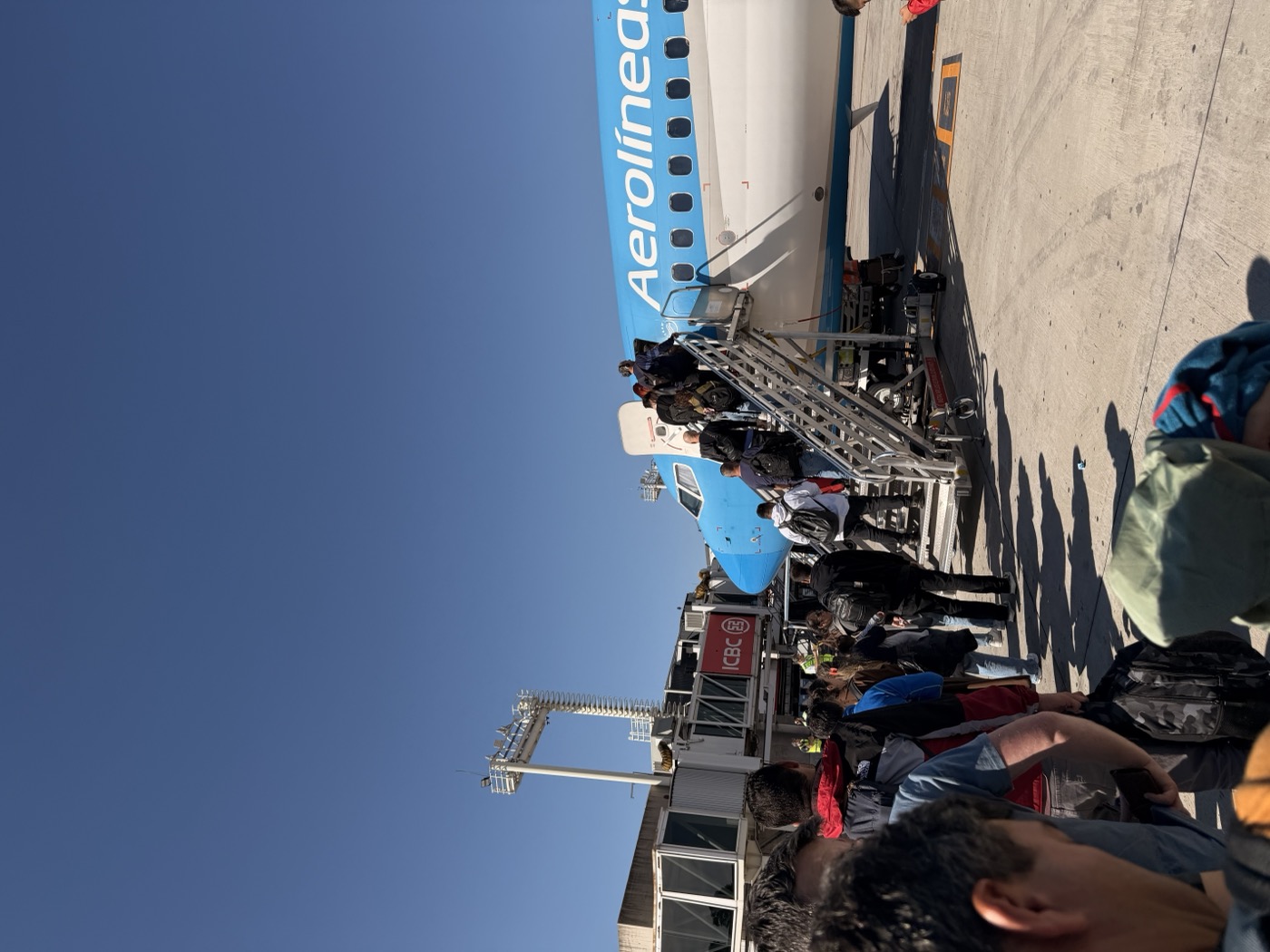
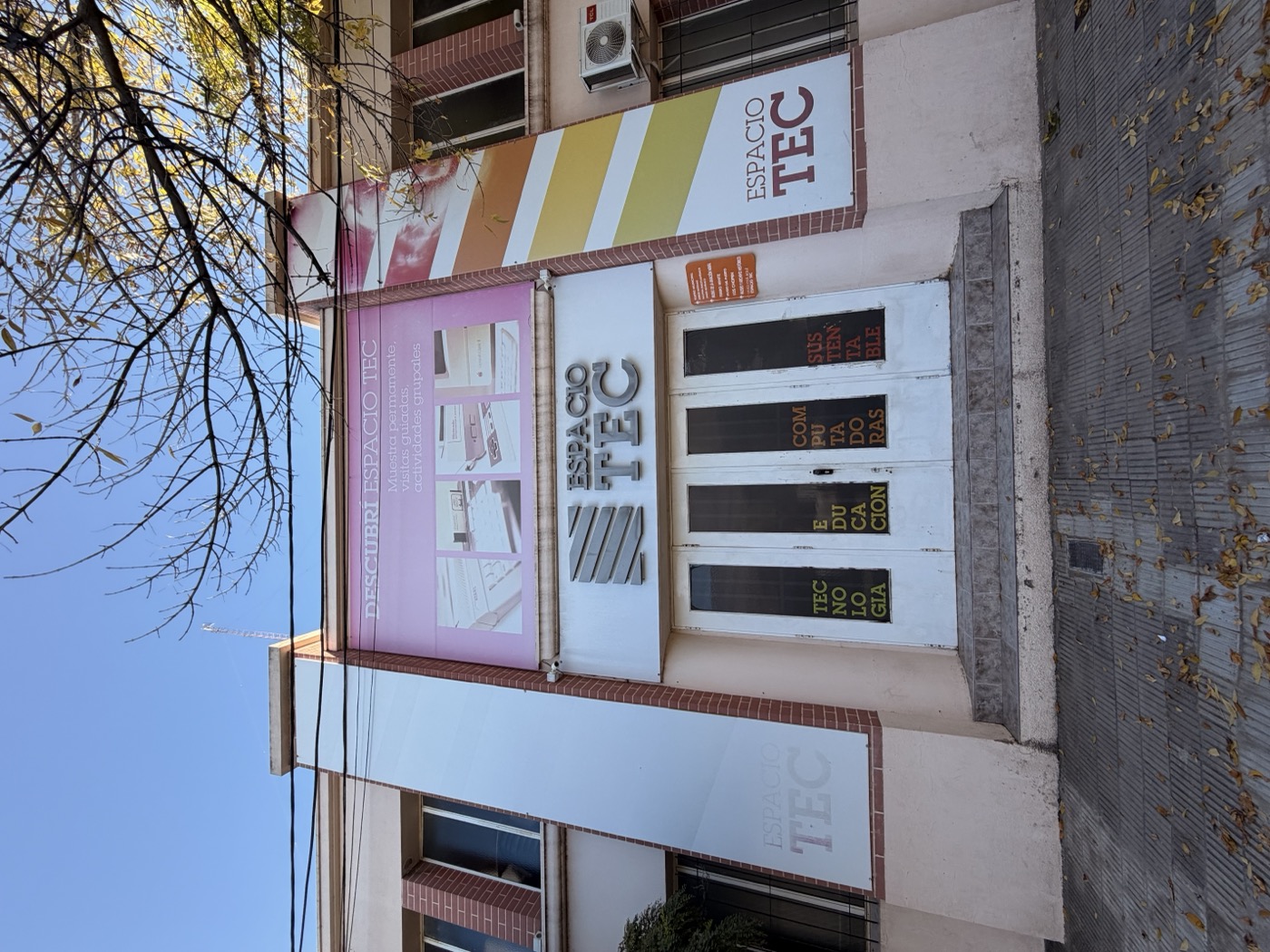
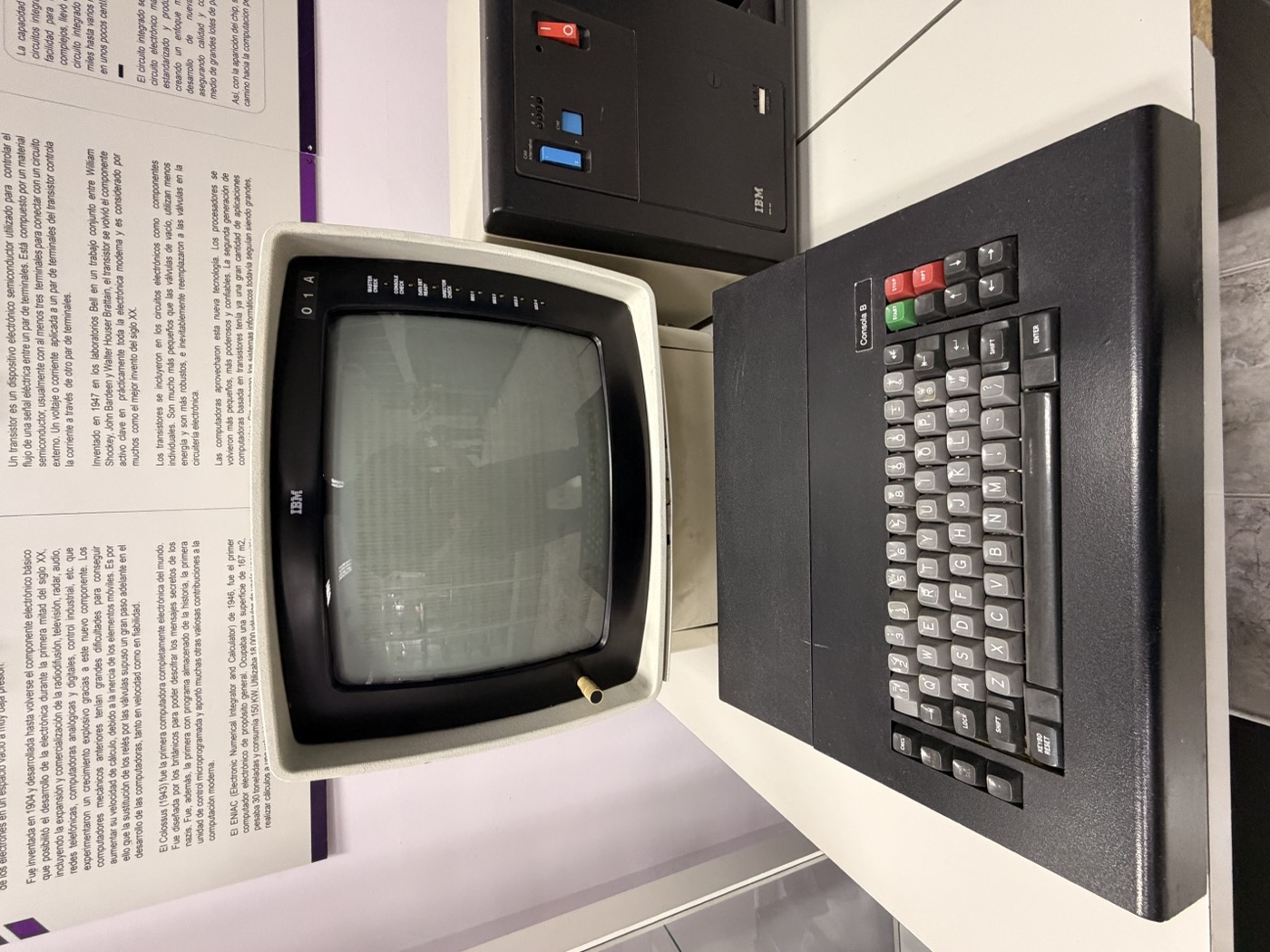
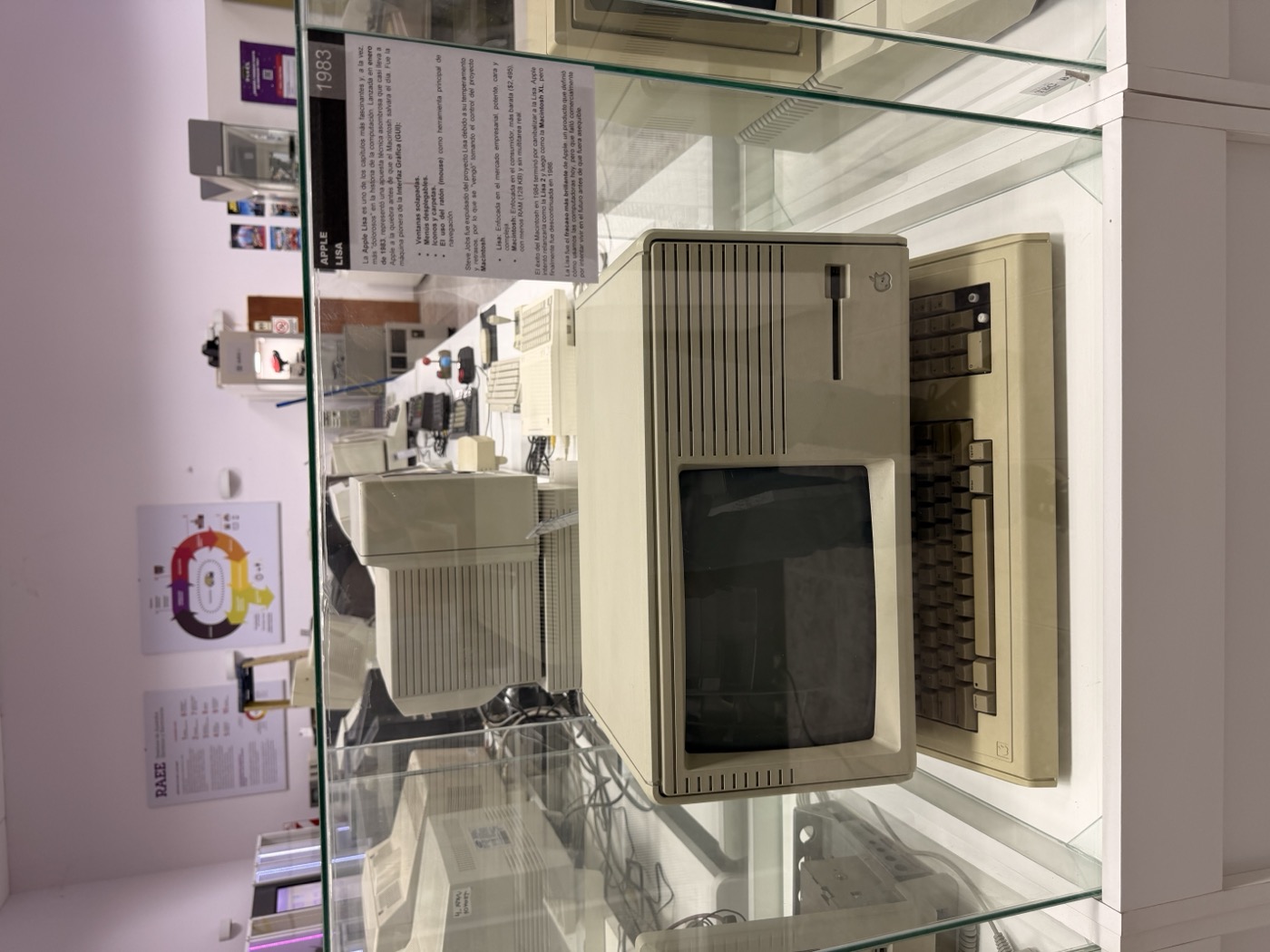
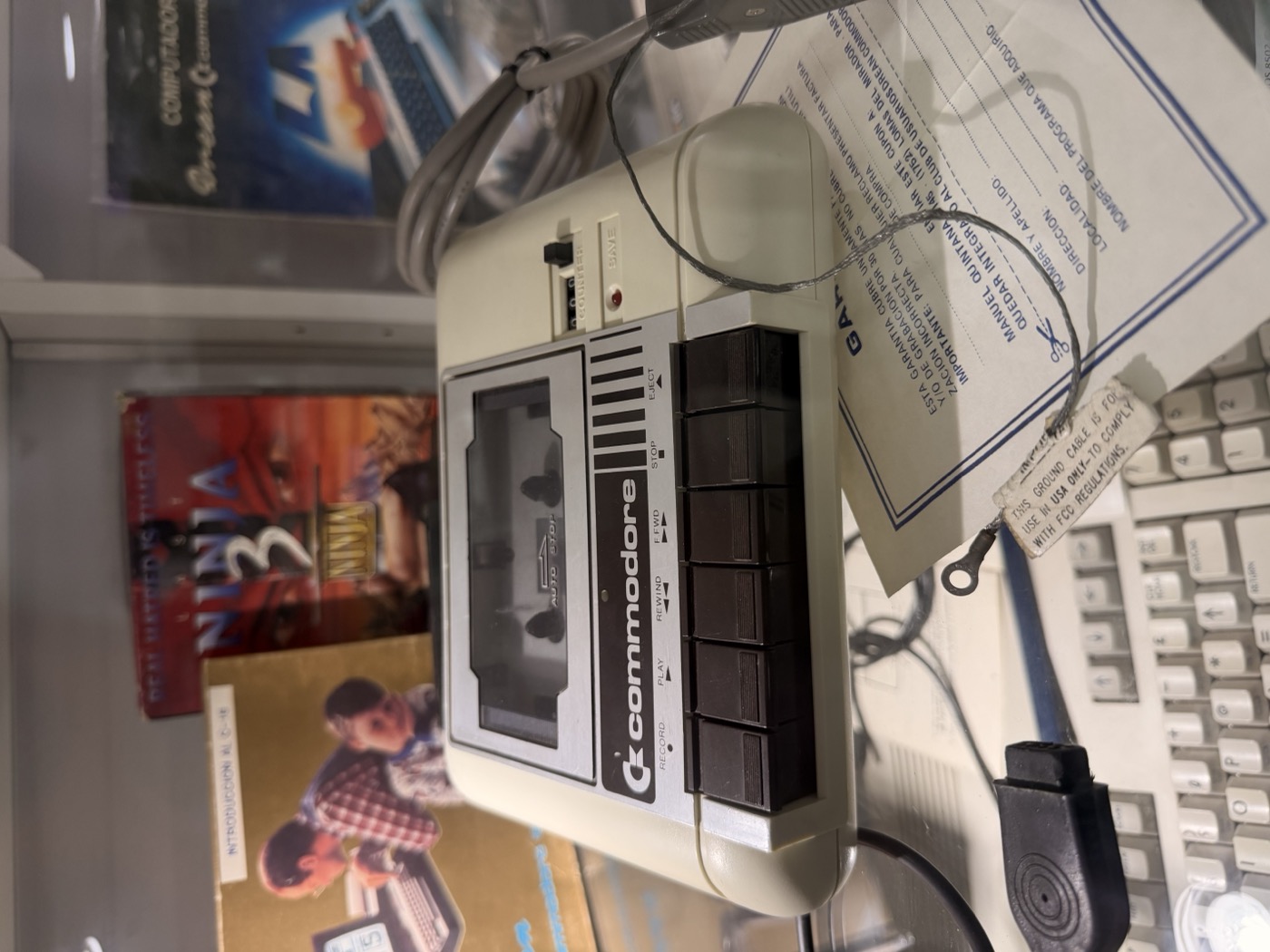
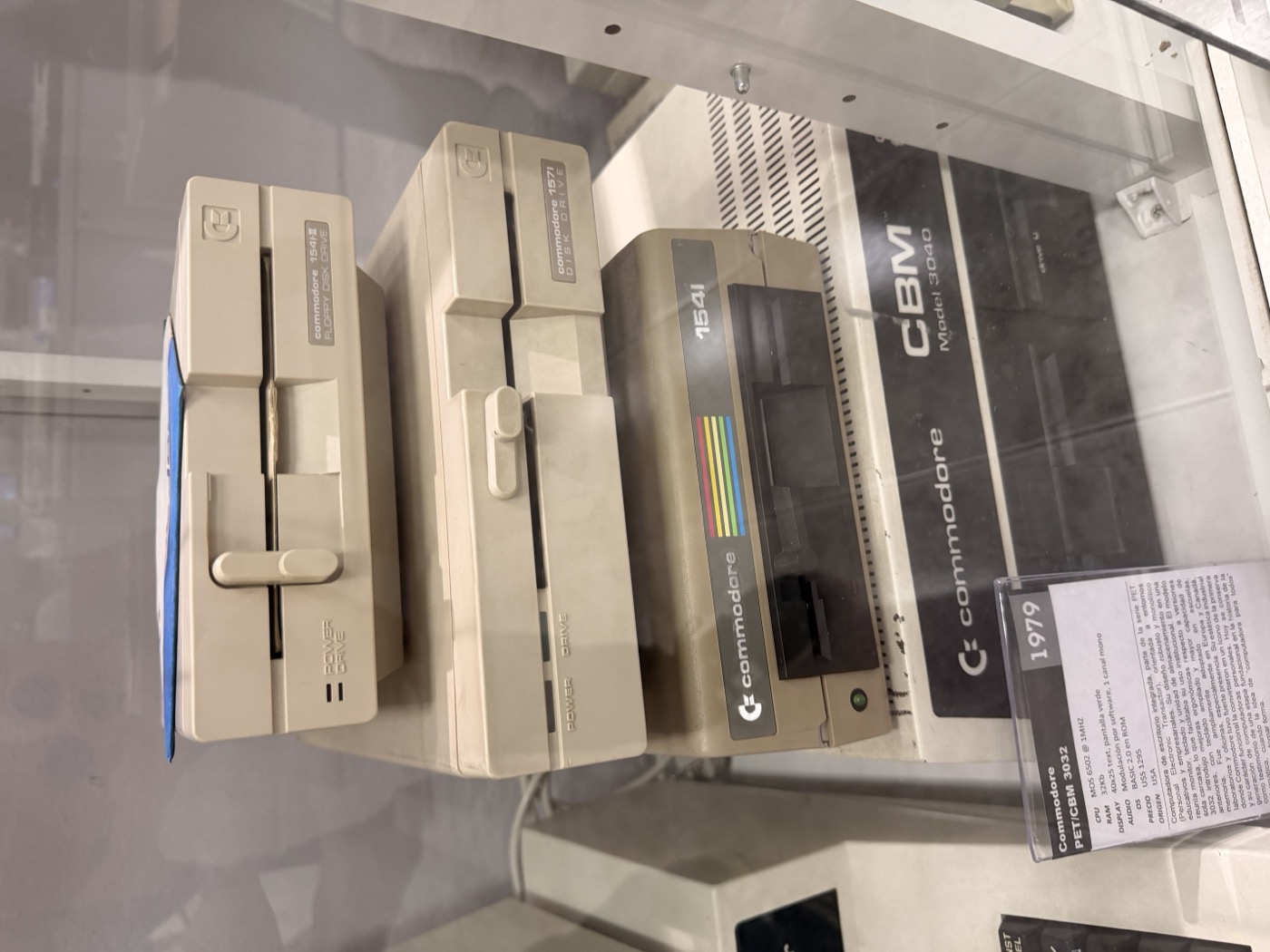
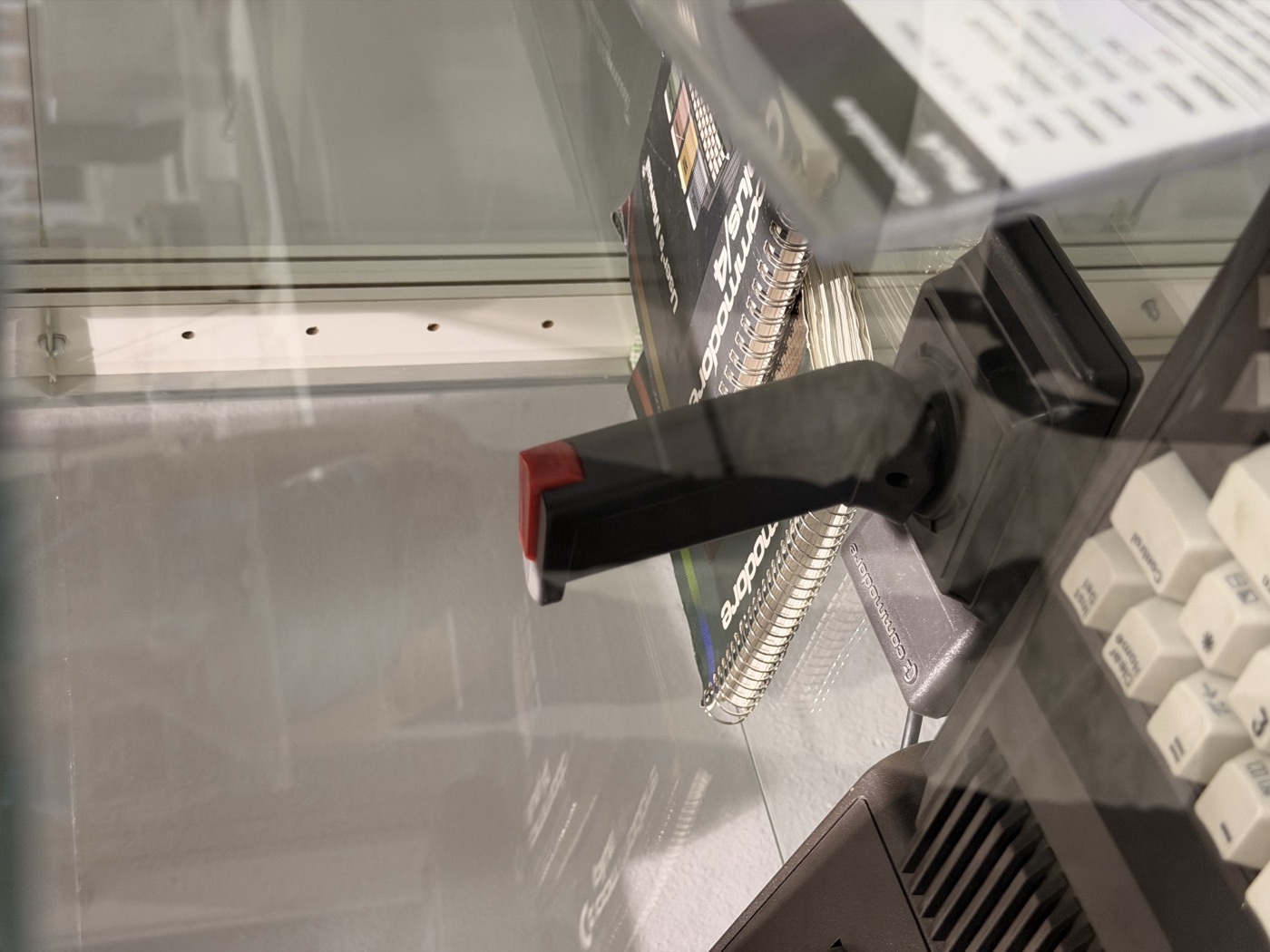
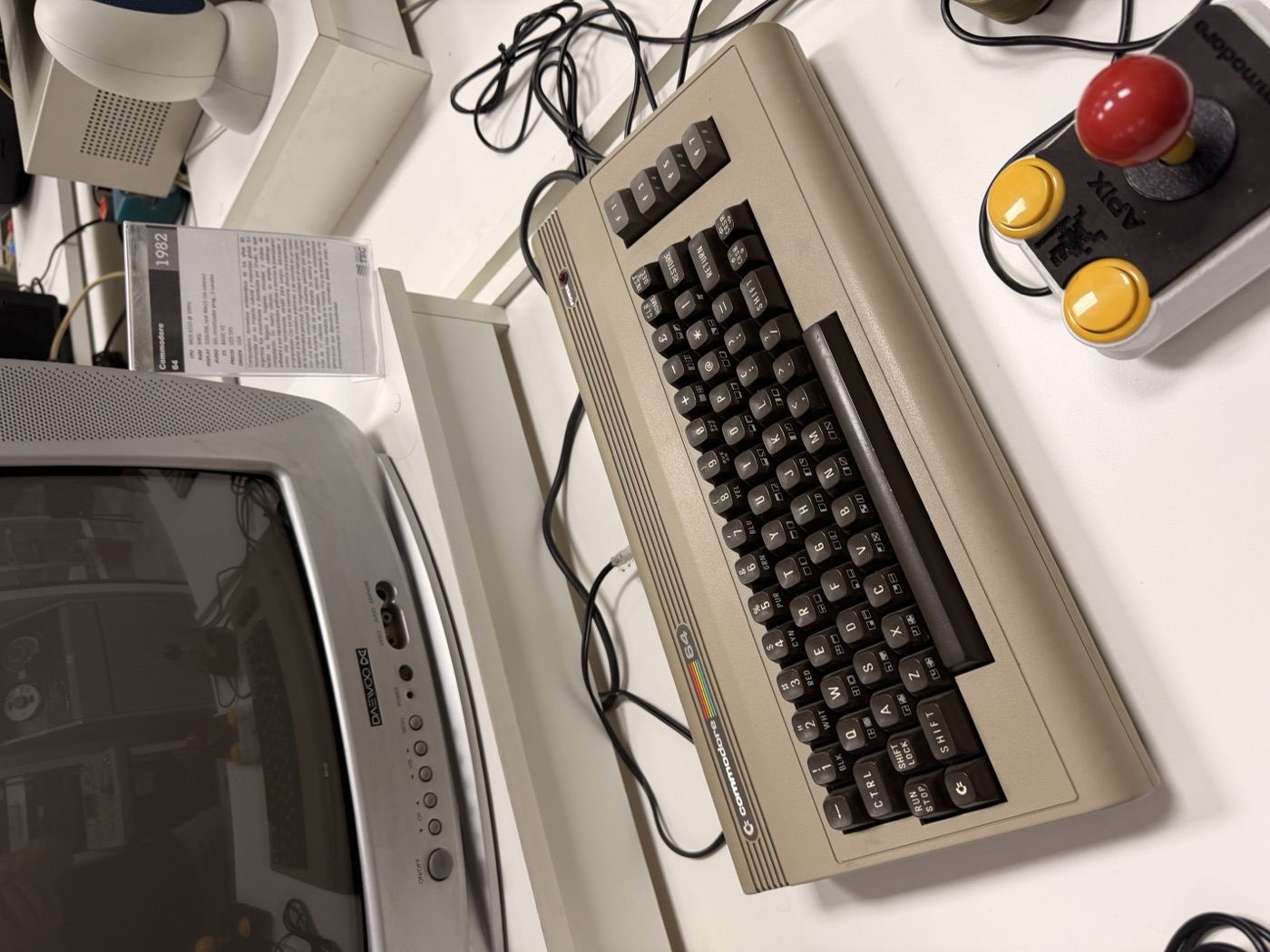
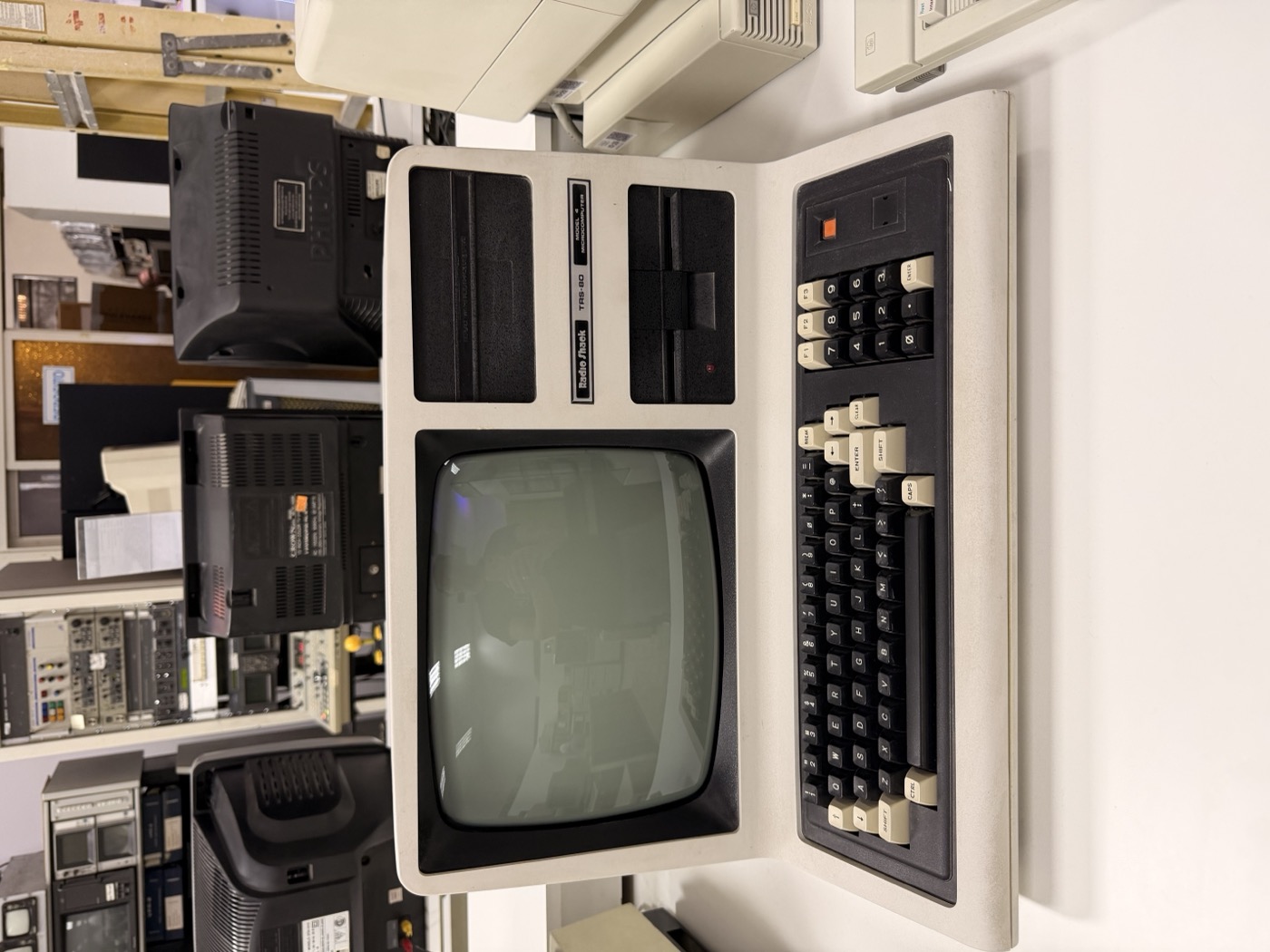
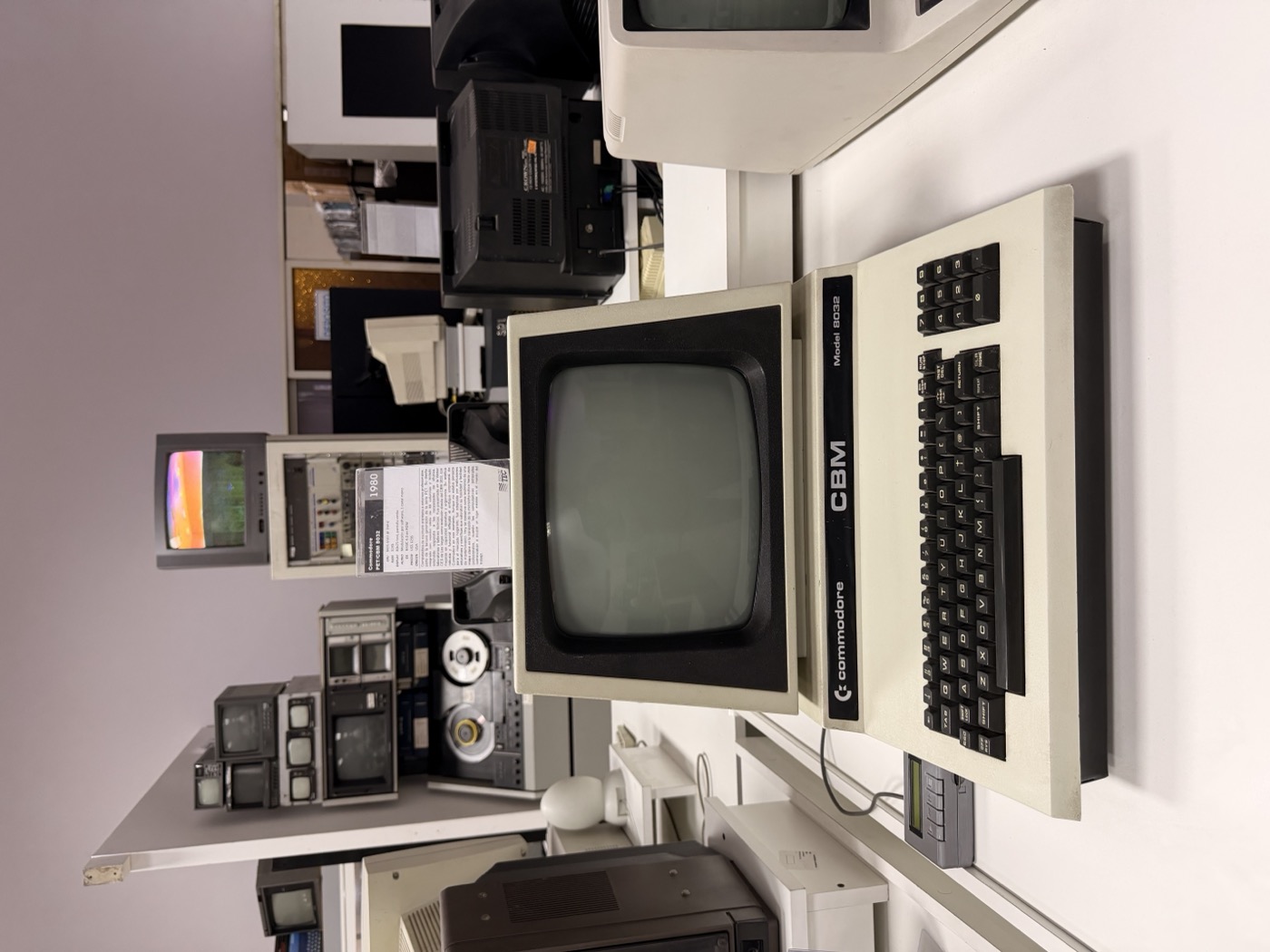
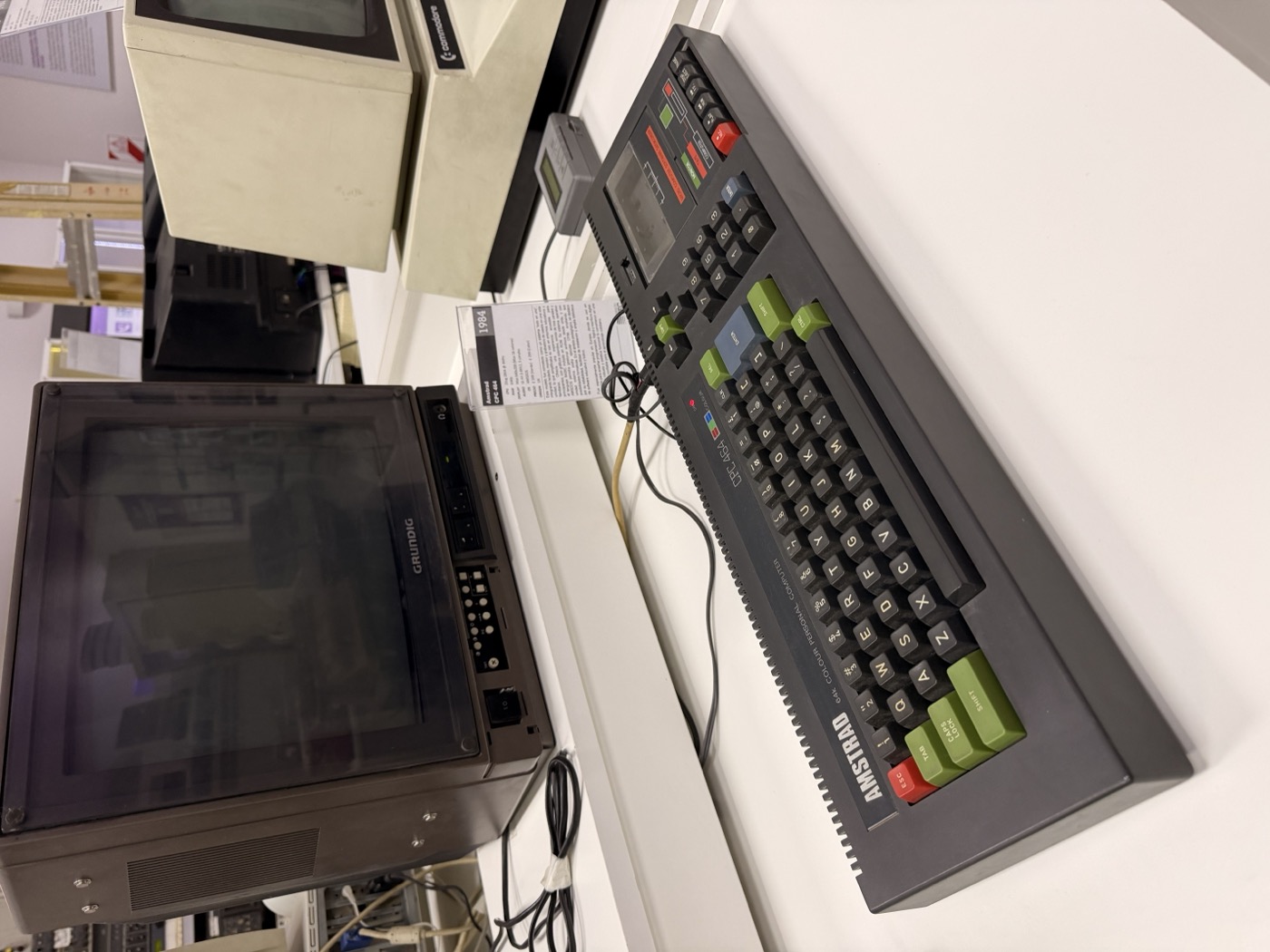
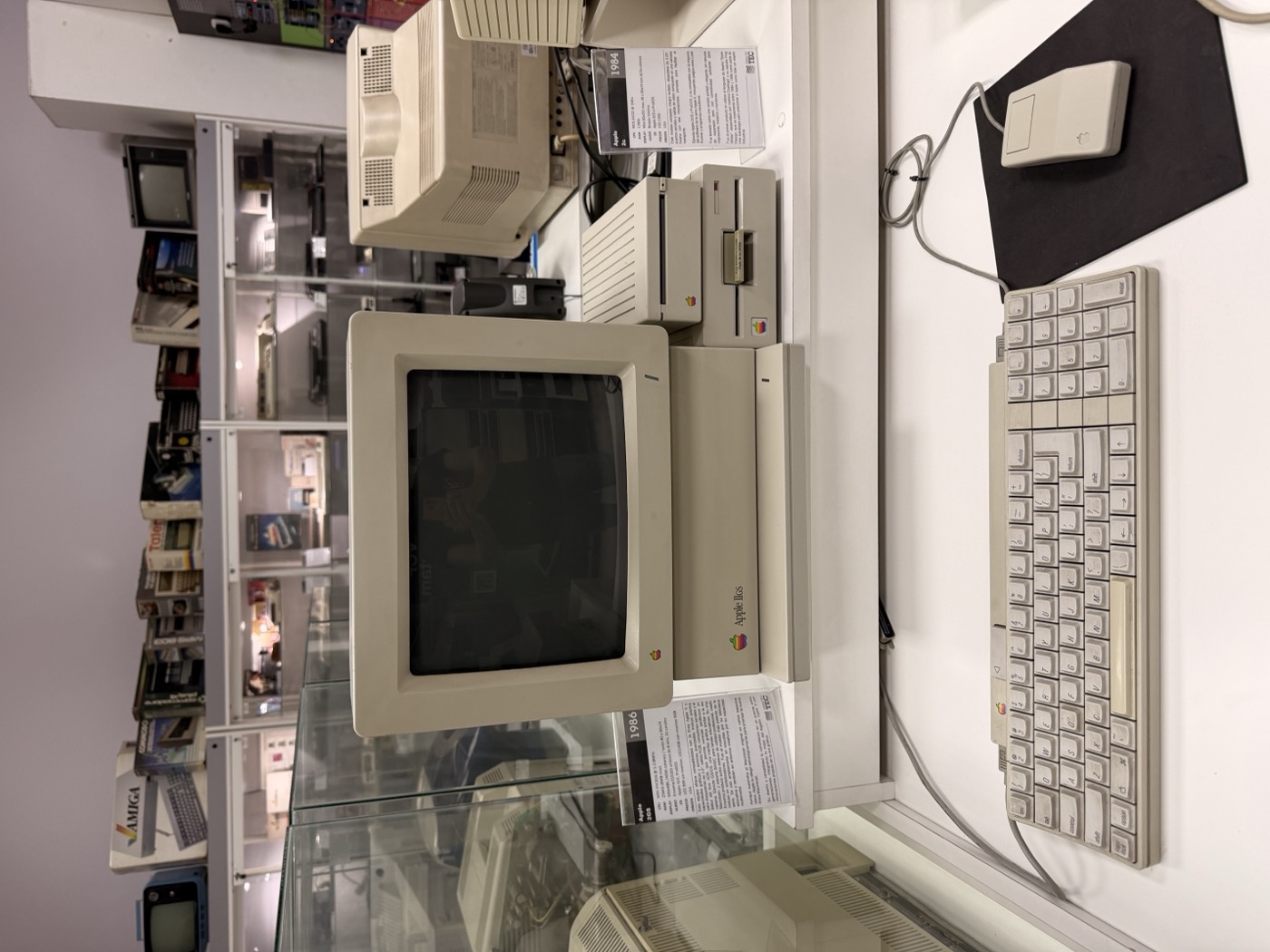
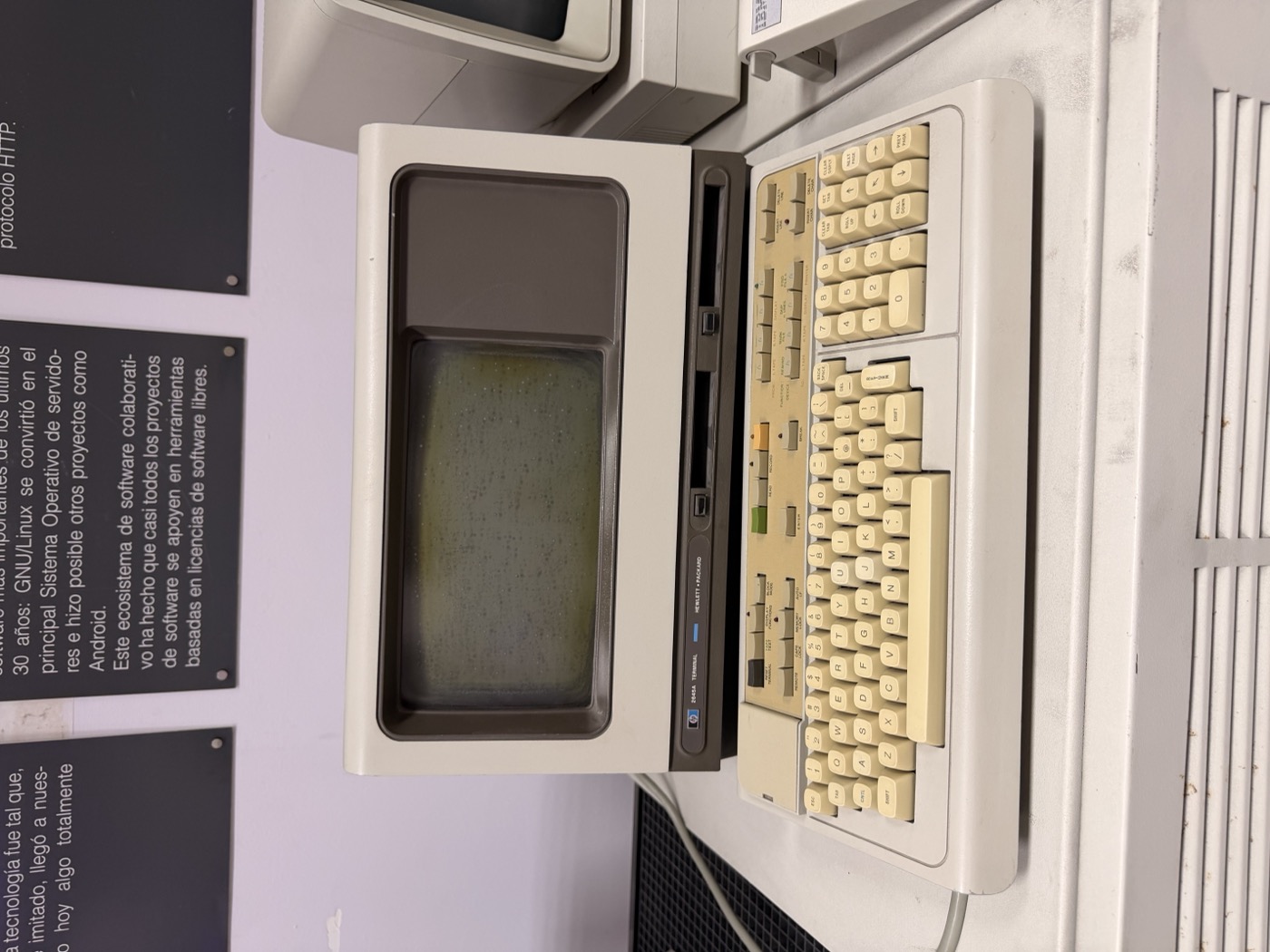
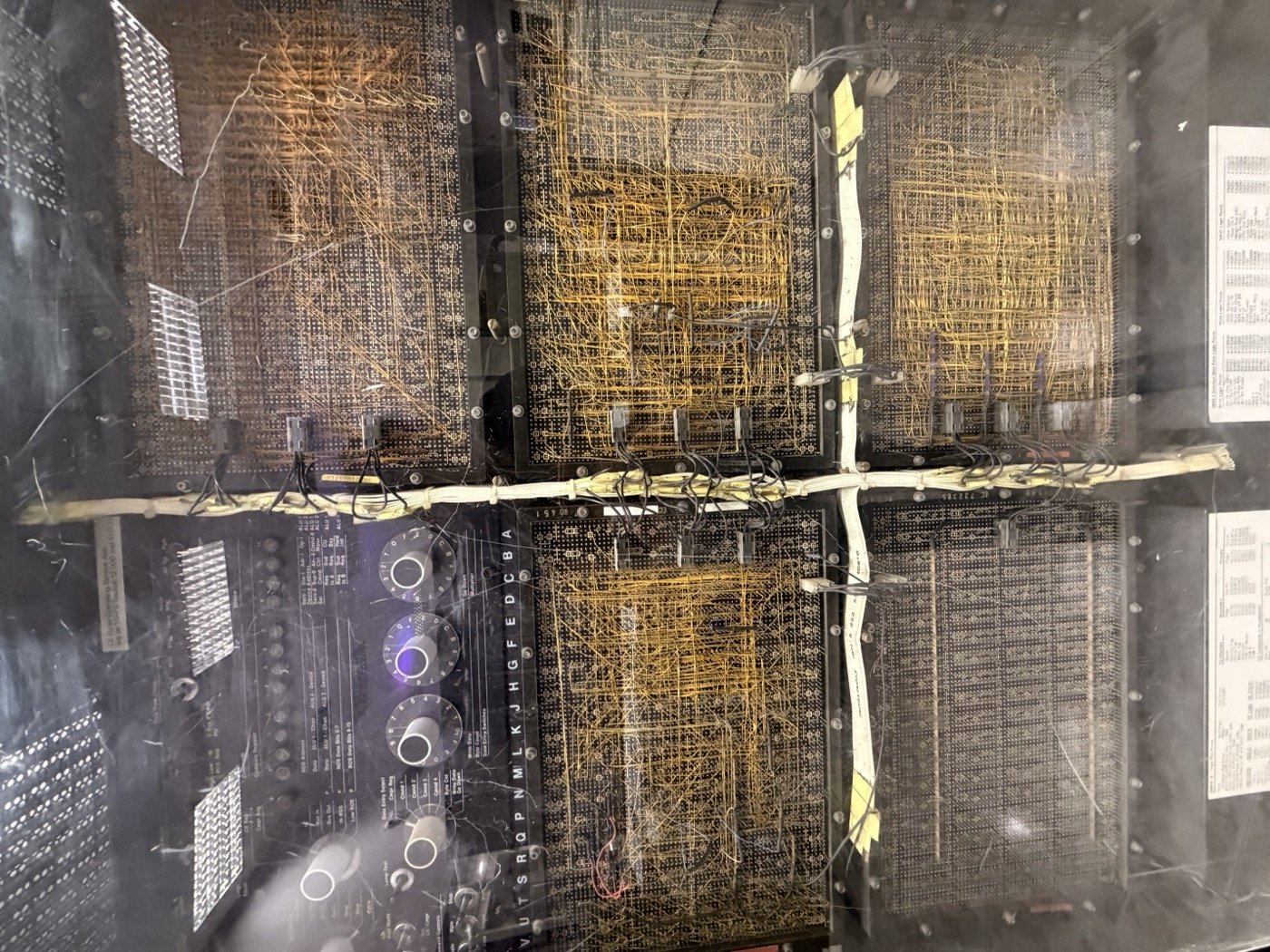
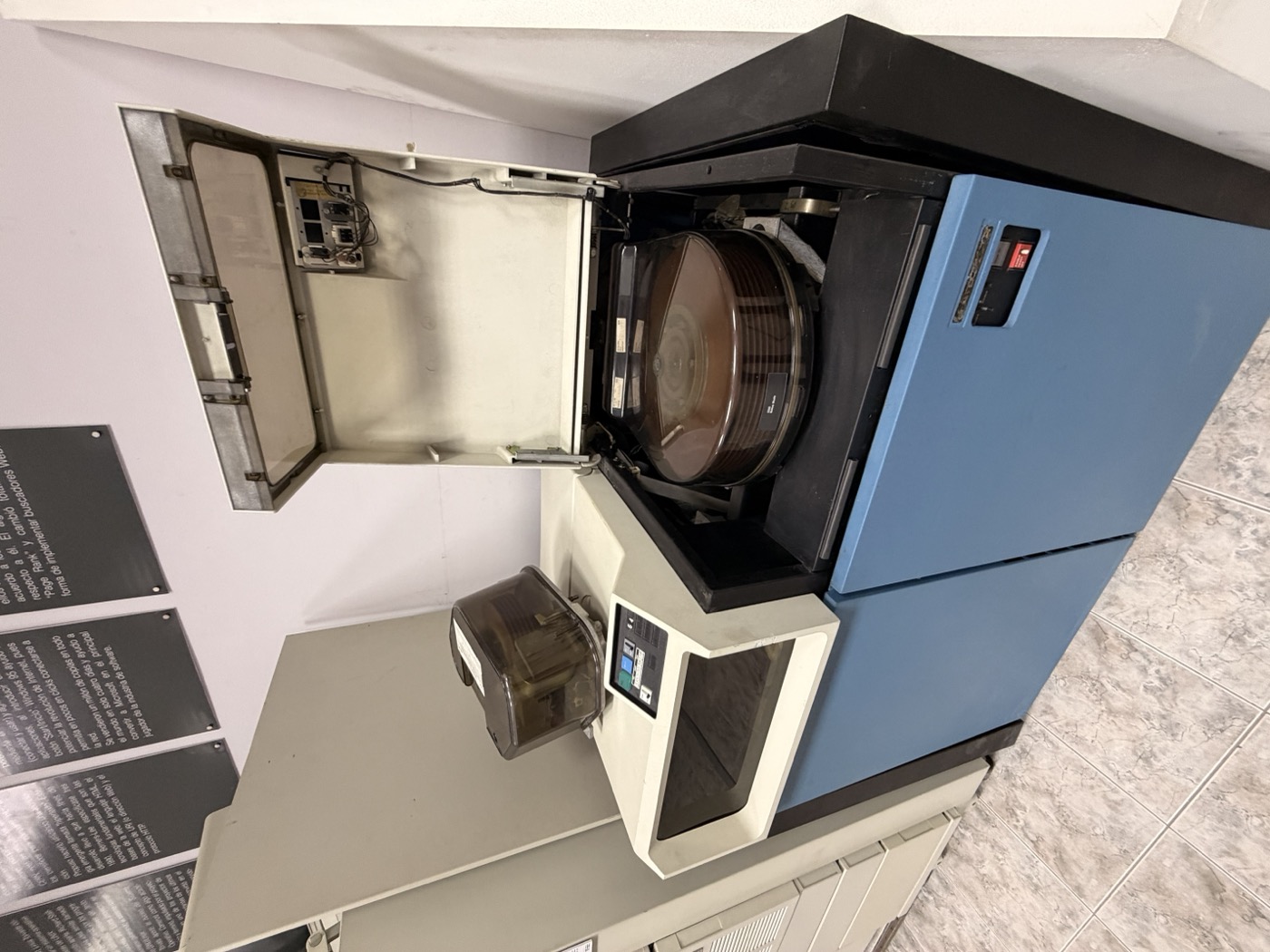
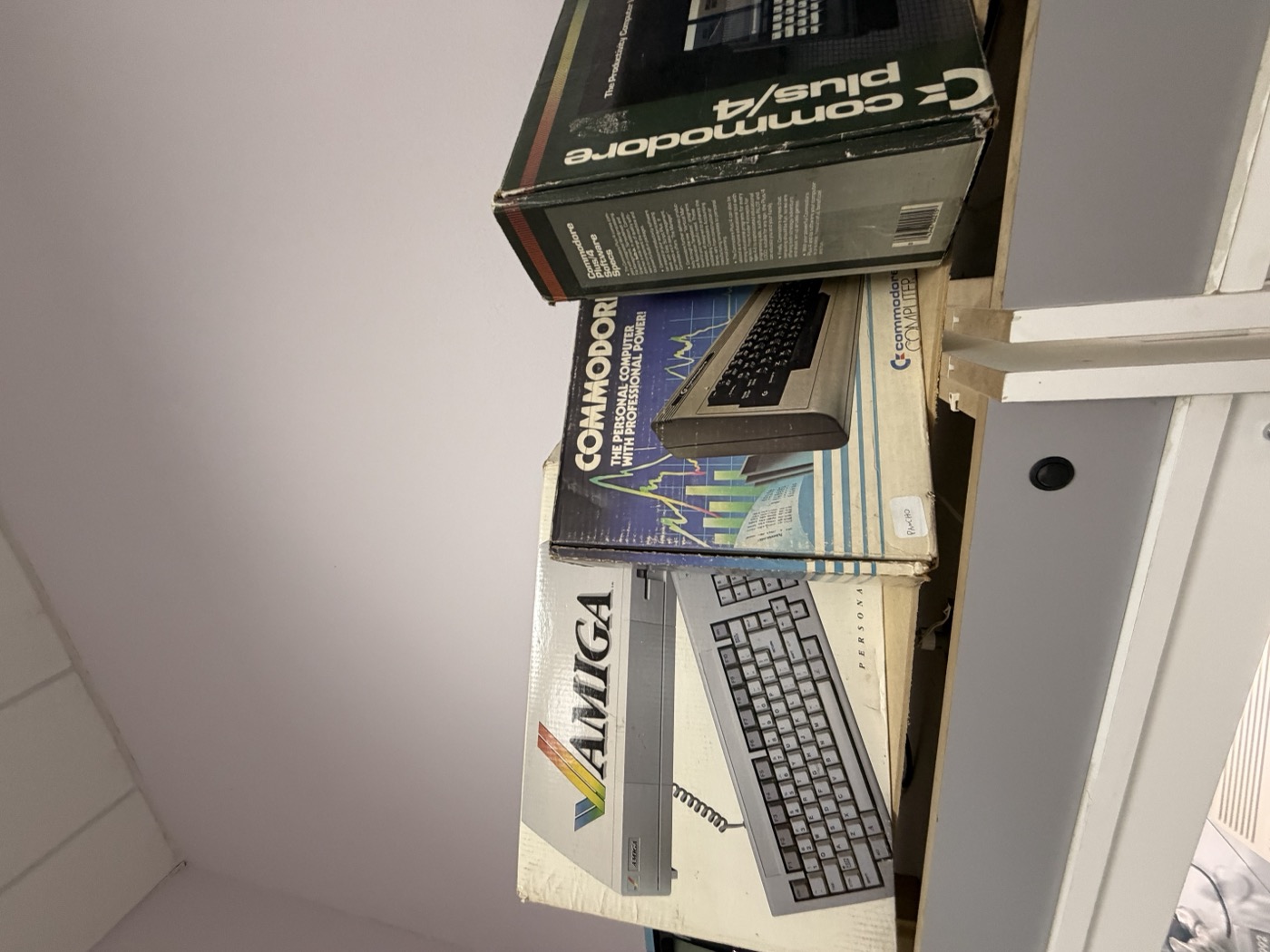
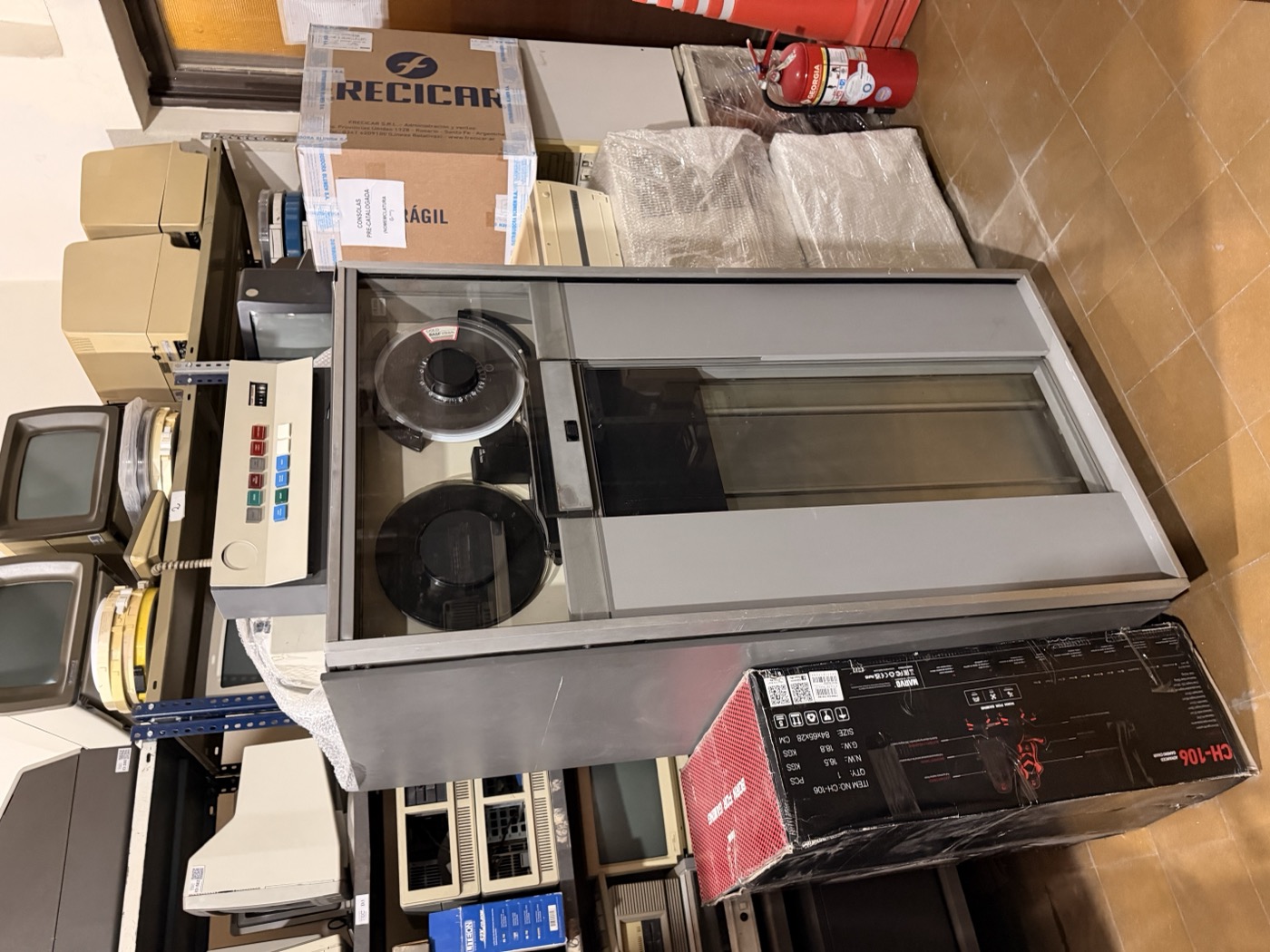
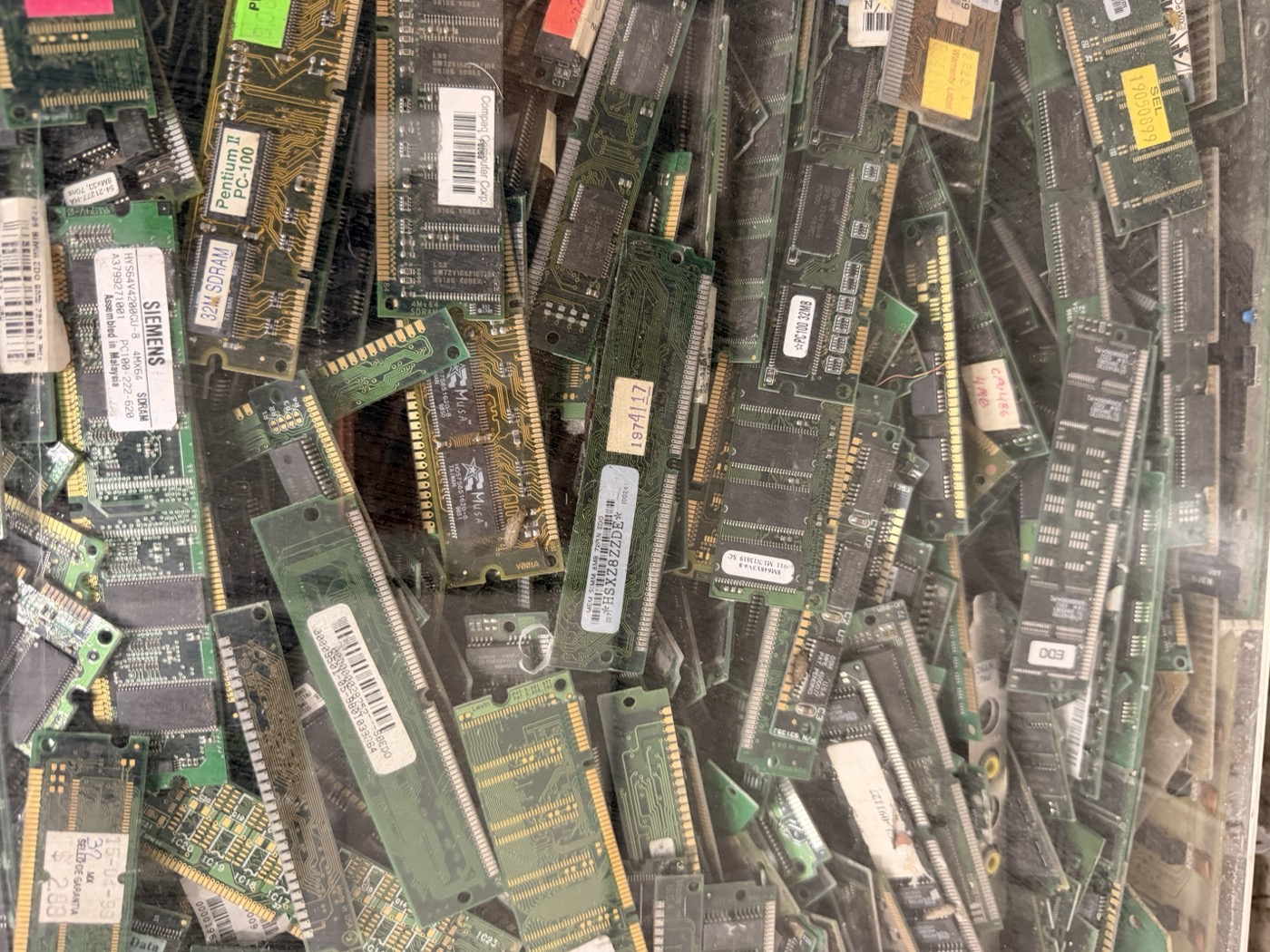
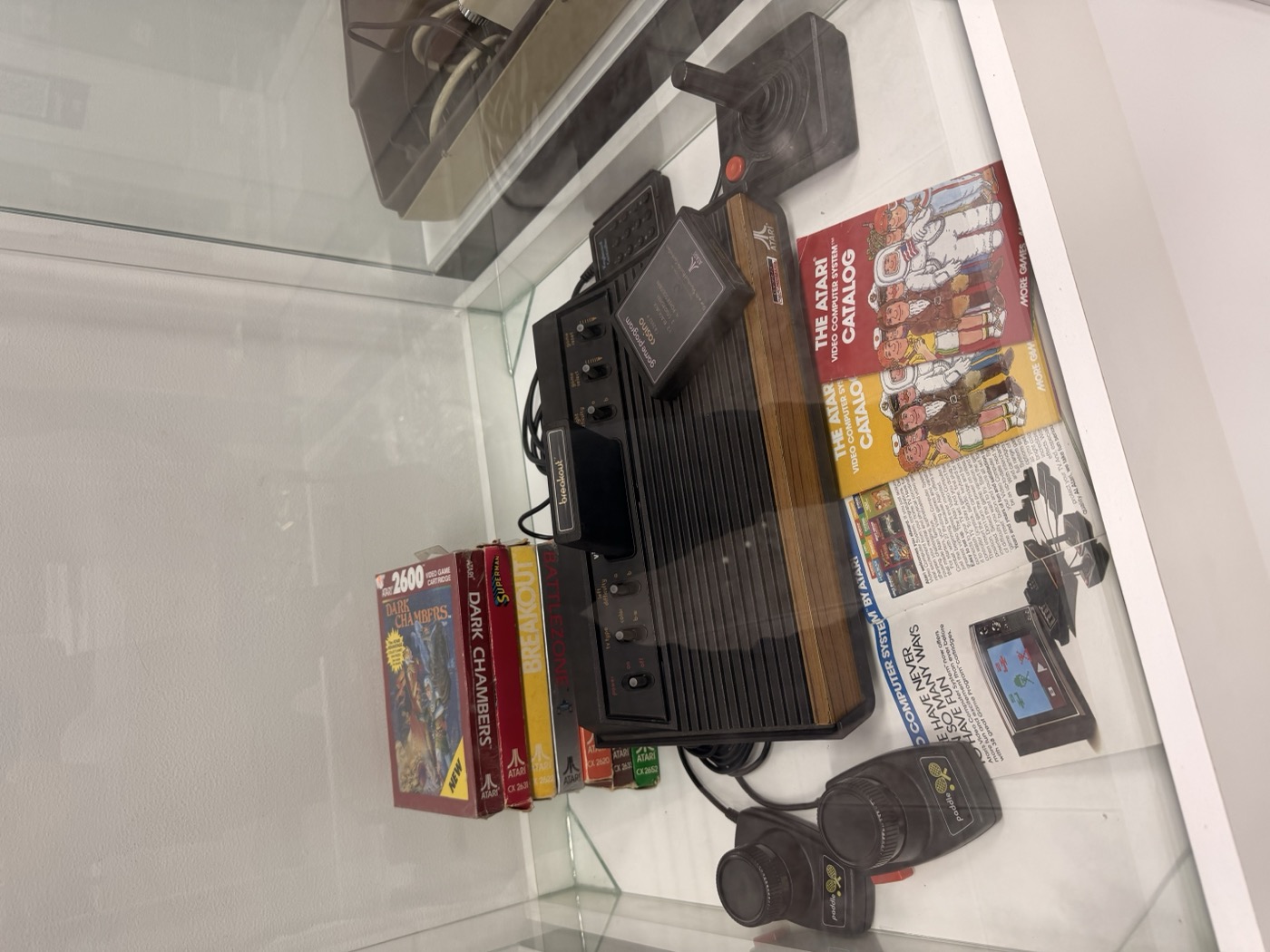
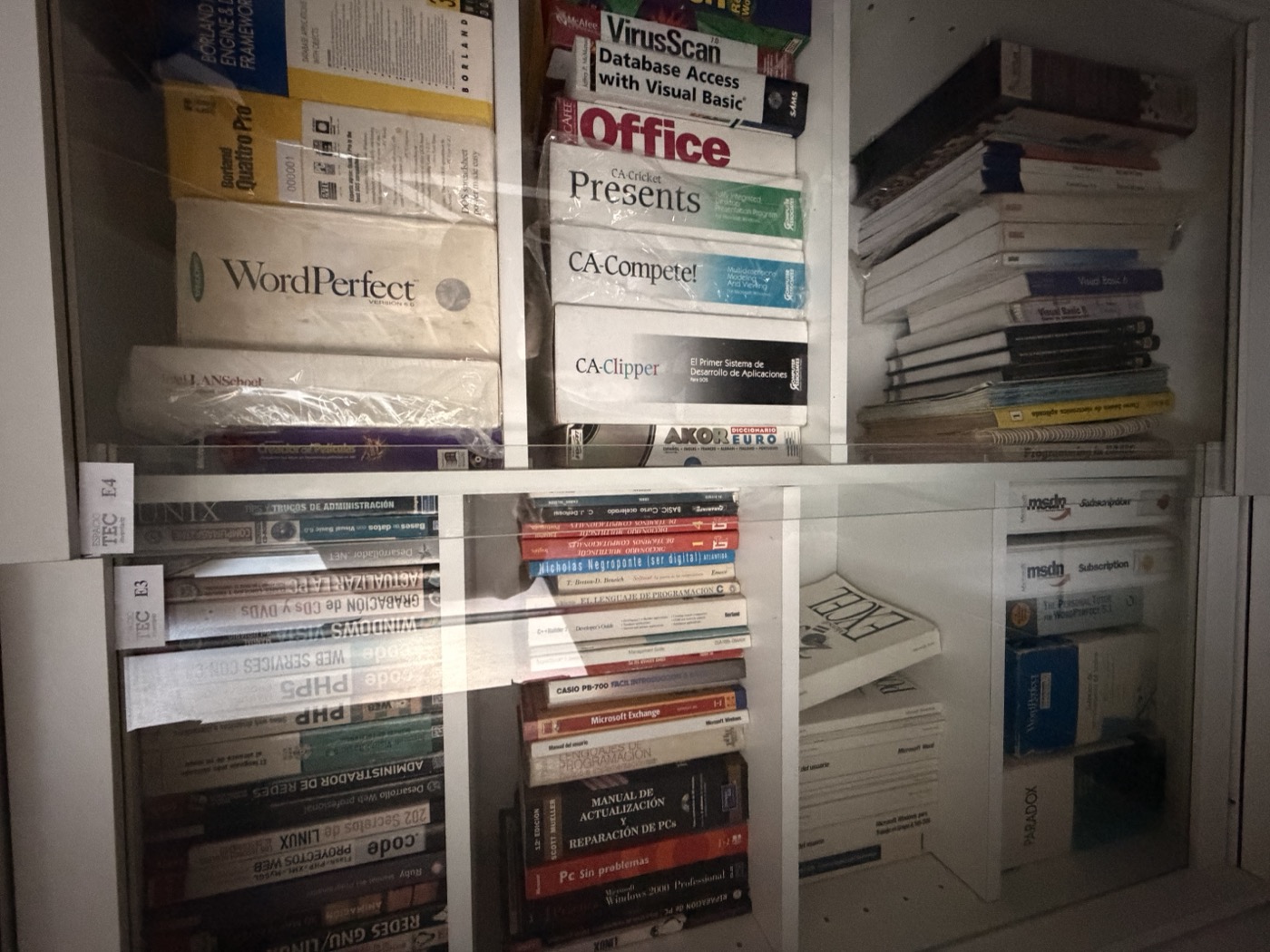
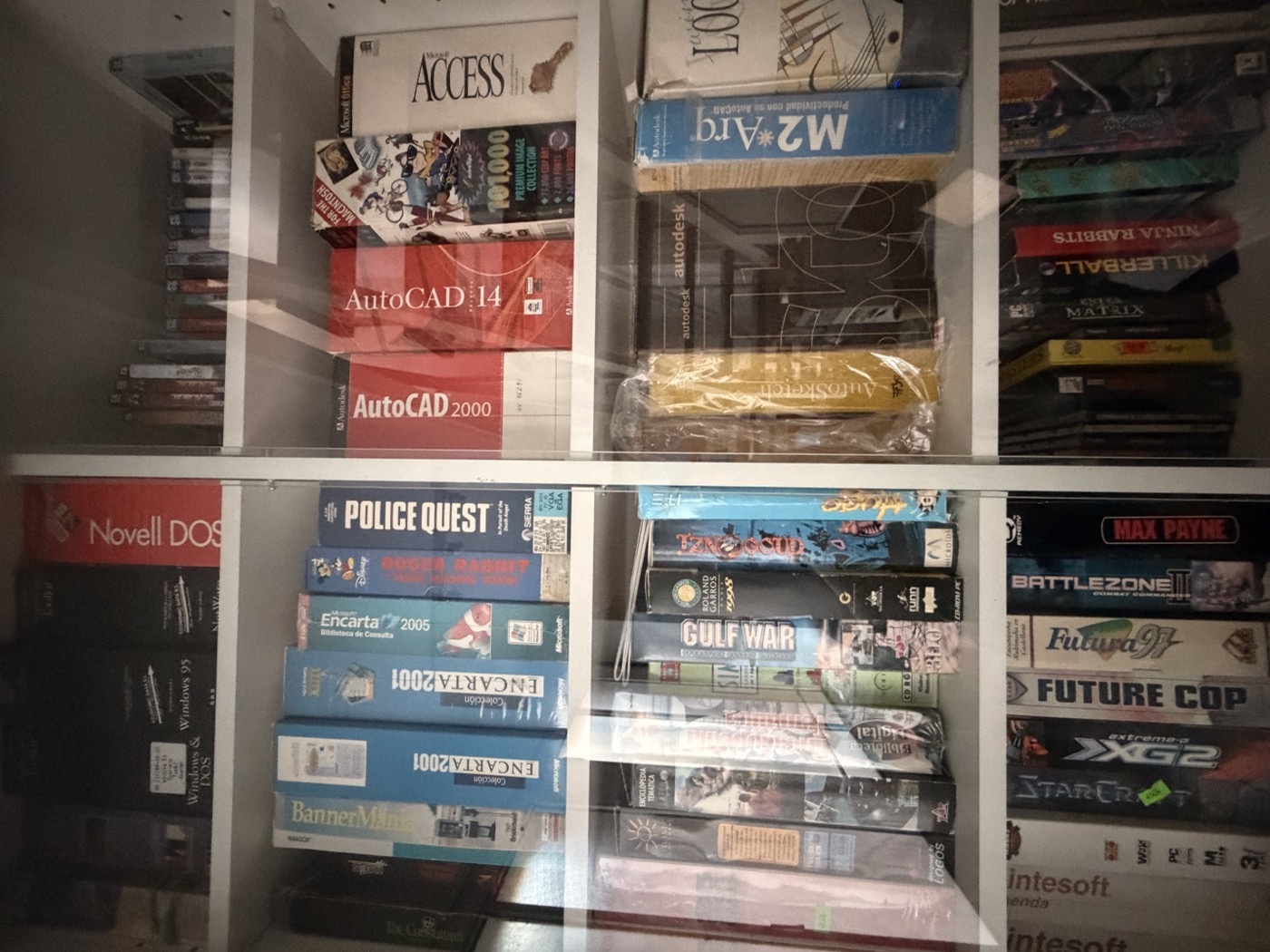
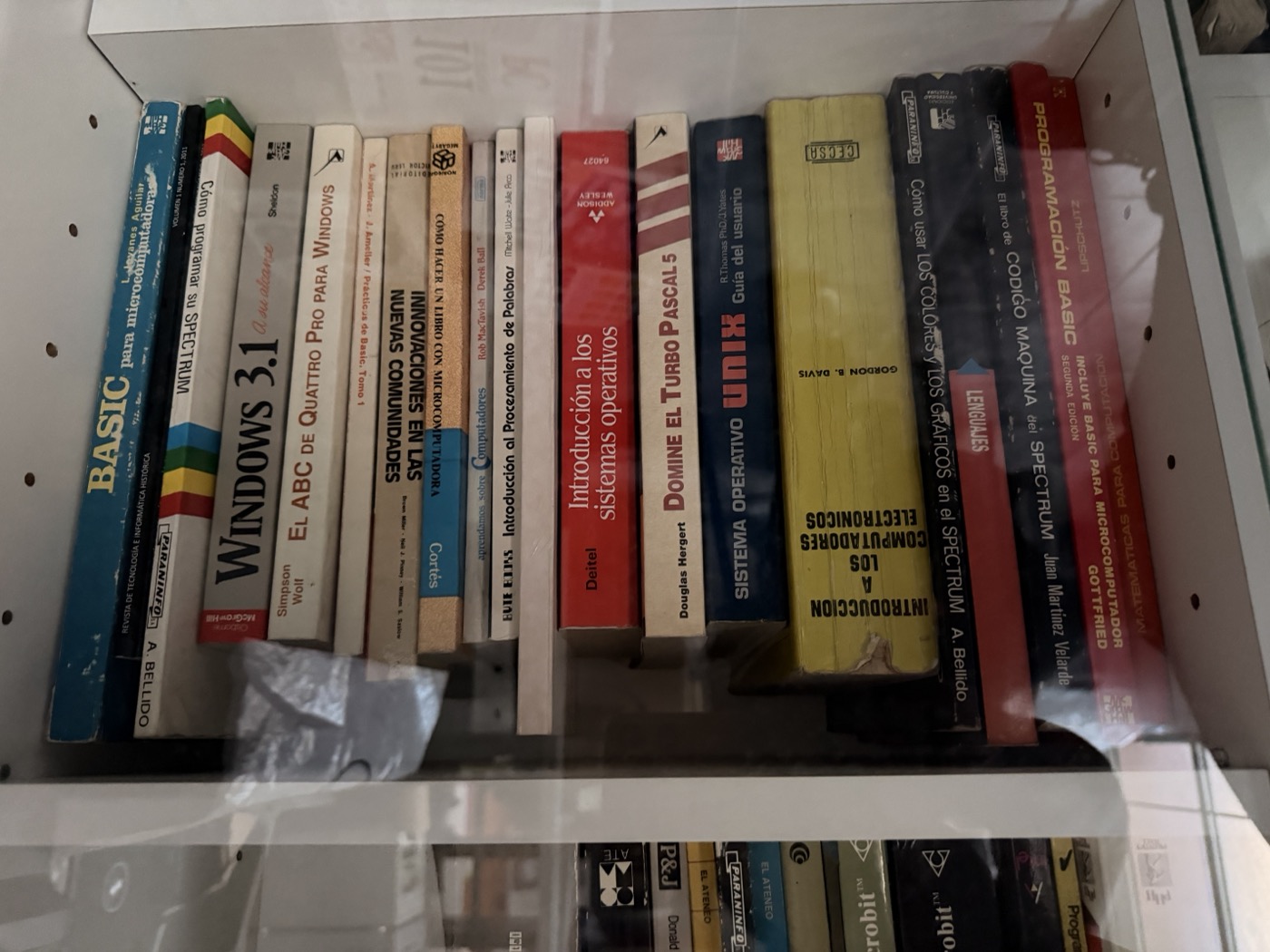
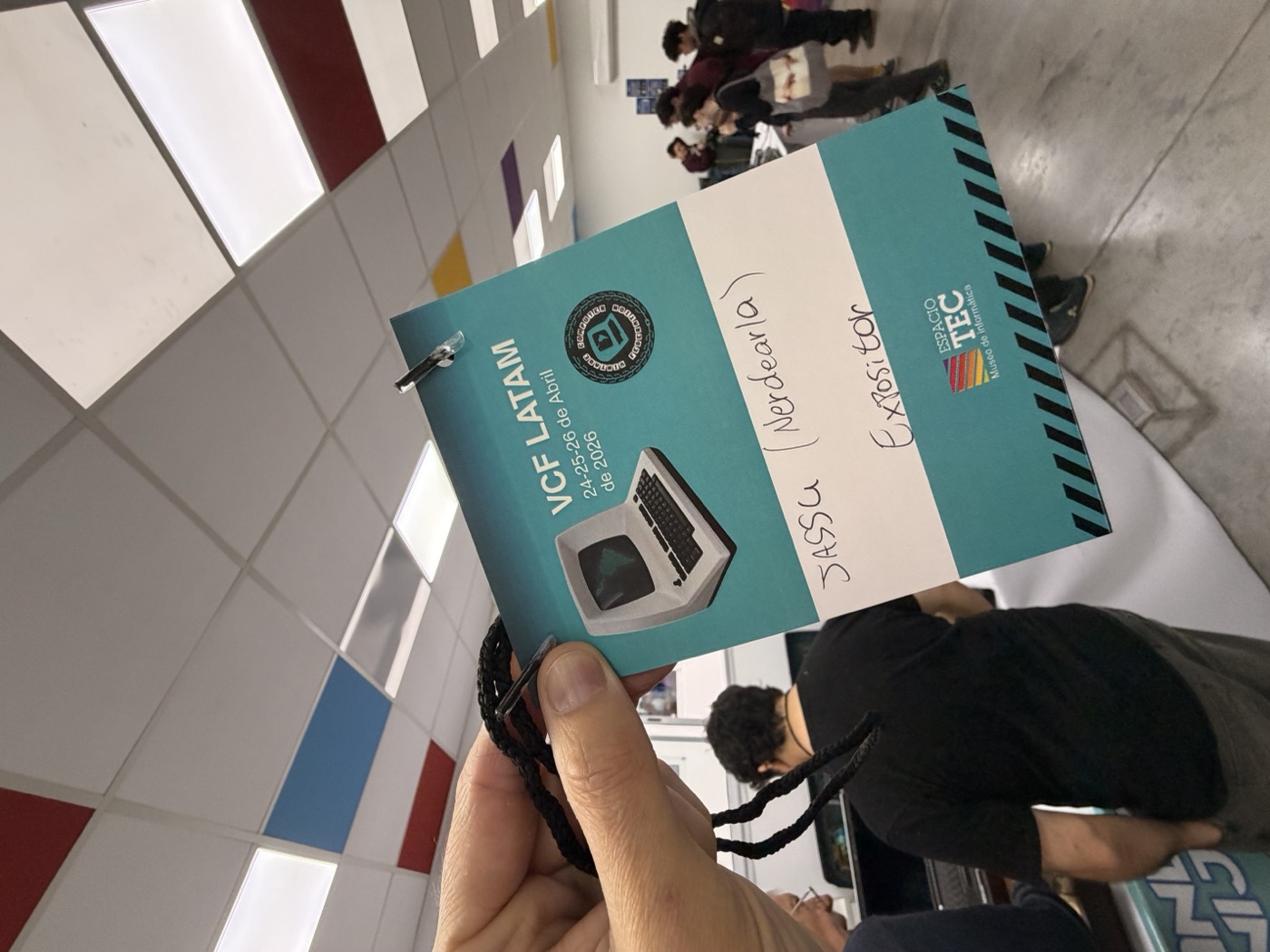
I got to Bahía Blanca on a Thursday. The first VCF Latam — the Latin American edition of the Vintage Computer Festival — opened the next day, so I had the afternoon to scope things out. First stop was Espacio TEC, on Thompson 665. Inside there were computers from several eras, several of them running: Apple Lisa, IBM, Commodores.
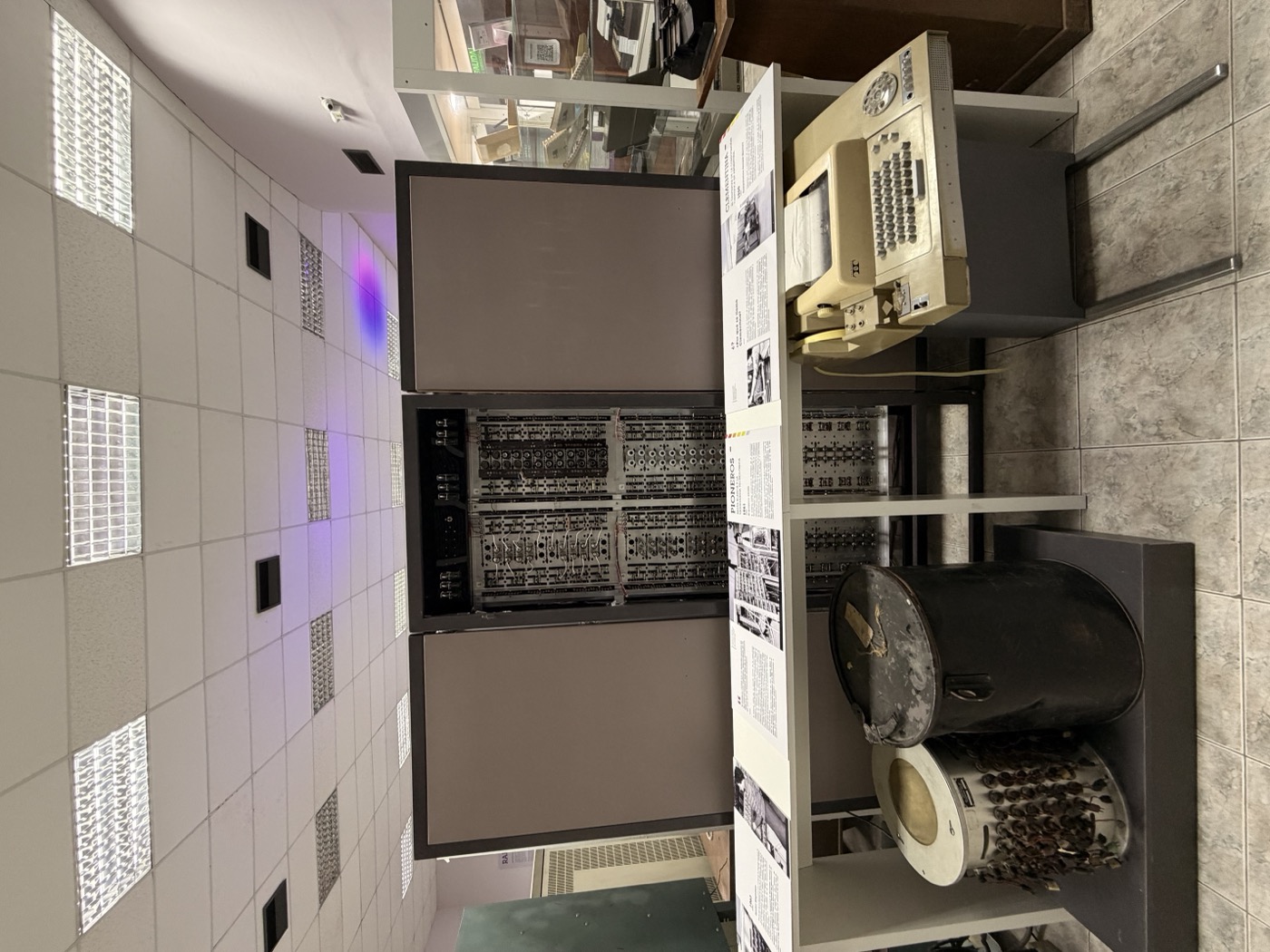
And there was Clementina — the first scientific computer in Argentina, installed in 1961 at the University of Buenos Aires under Manuel Sadosky's leadership. Seeing it at the first VCF Latam was a statement of intent.
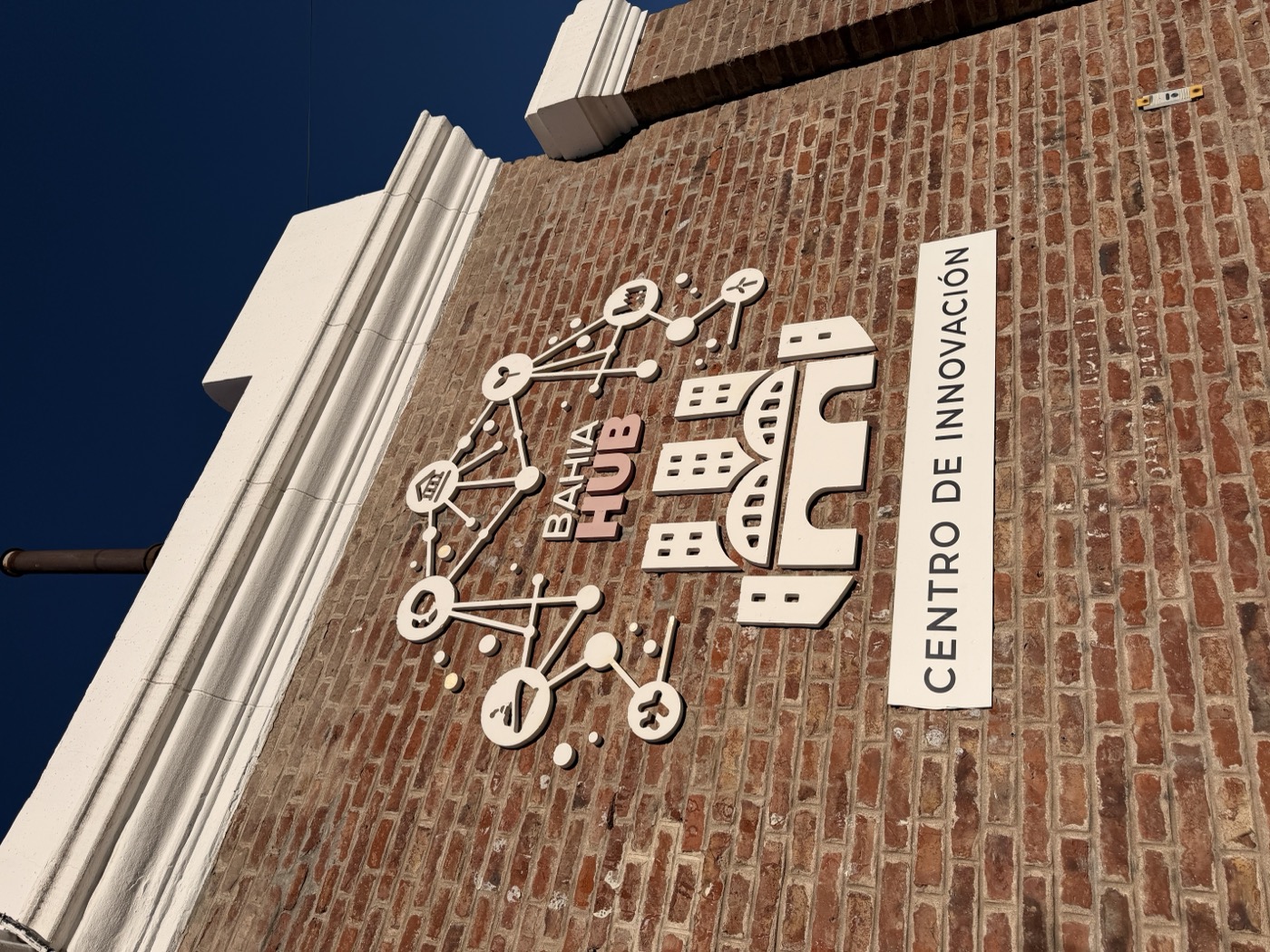
The festival ran across two venues a few blocks apart: the warehouse at Bahía HUB and the museum on Thompson. Walking between them was crossing the festival twice — at Bahía HUB the booths, the talks, the machines on display; at Espacio TEC, the machines that live there year-round, lent out to the festival for a few days.
Bahía HUB
The first thing that hit you walking in was the noise from the machines: CRT monitors, keyboards, datasettes, boot beeps, all running at once.
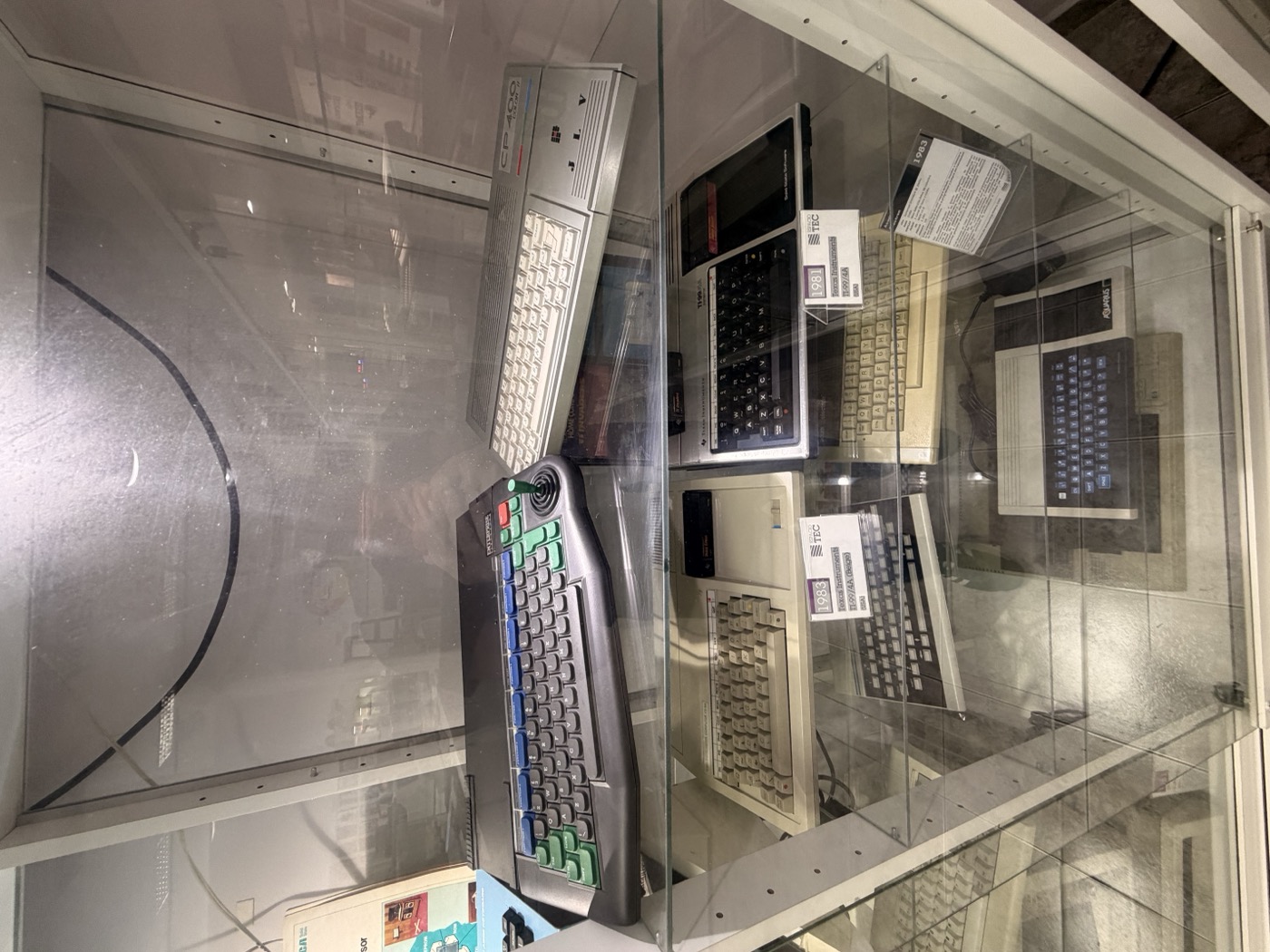
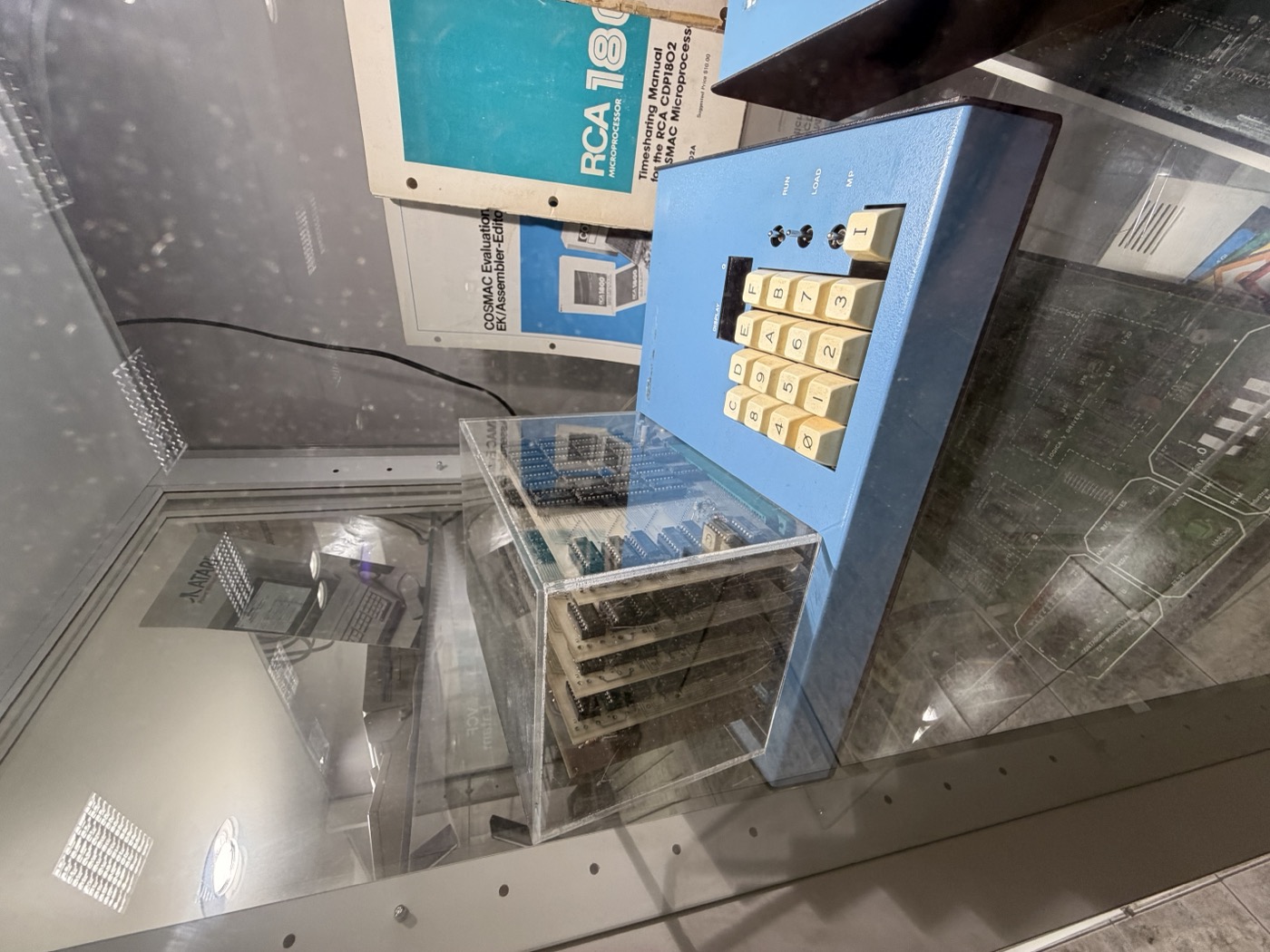
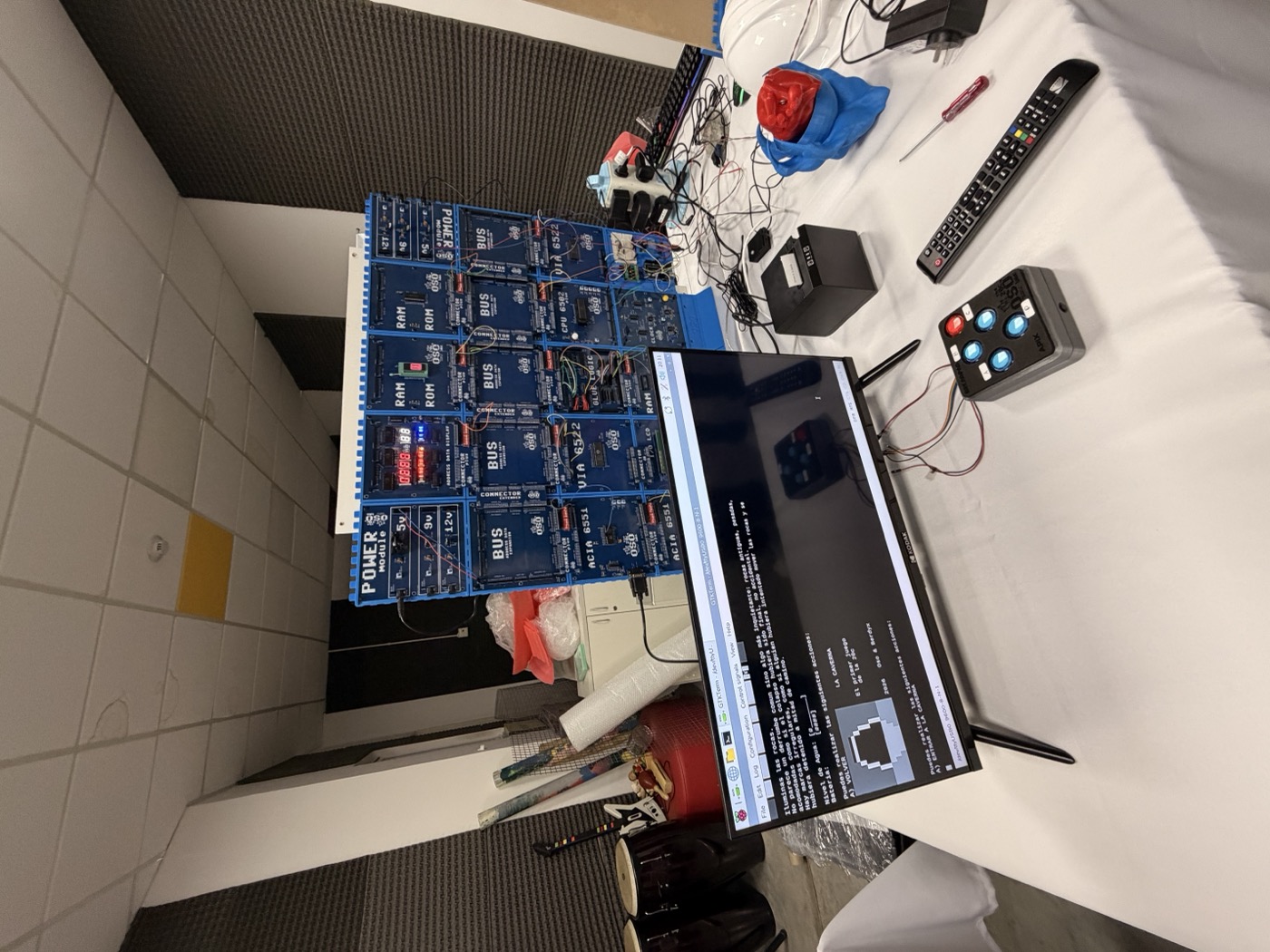
A TI-99/4A was running with a FlashROM99 cartridge — Texas Instruments' weird machine from '79, 16-bit CPU when everyone else was on 8, brought back to life without touching the original hardware. Behind it, an MSXvR — a modern MSX, kept alive by a community that refuses to let the standard die. Past that, a modular 6502 with each subsystem in its own blue acrylic block: power, ROM, RAM, bus, ACIA, CPU.
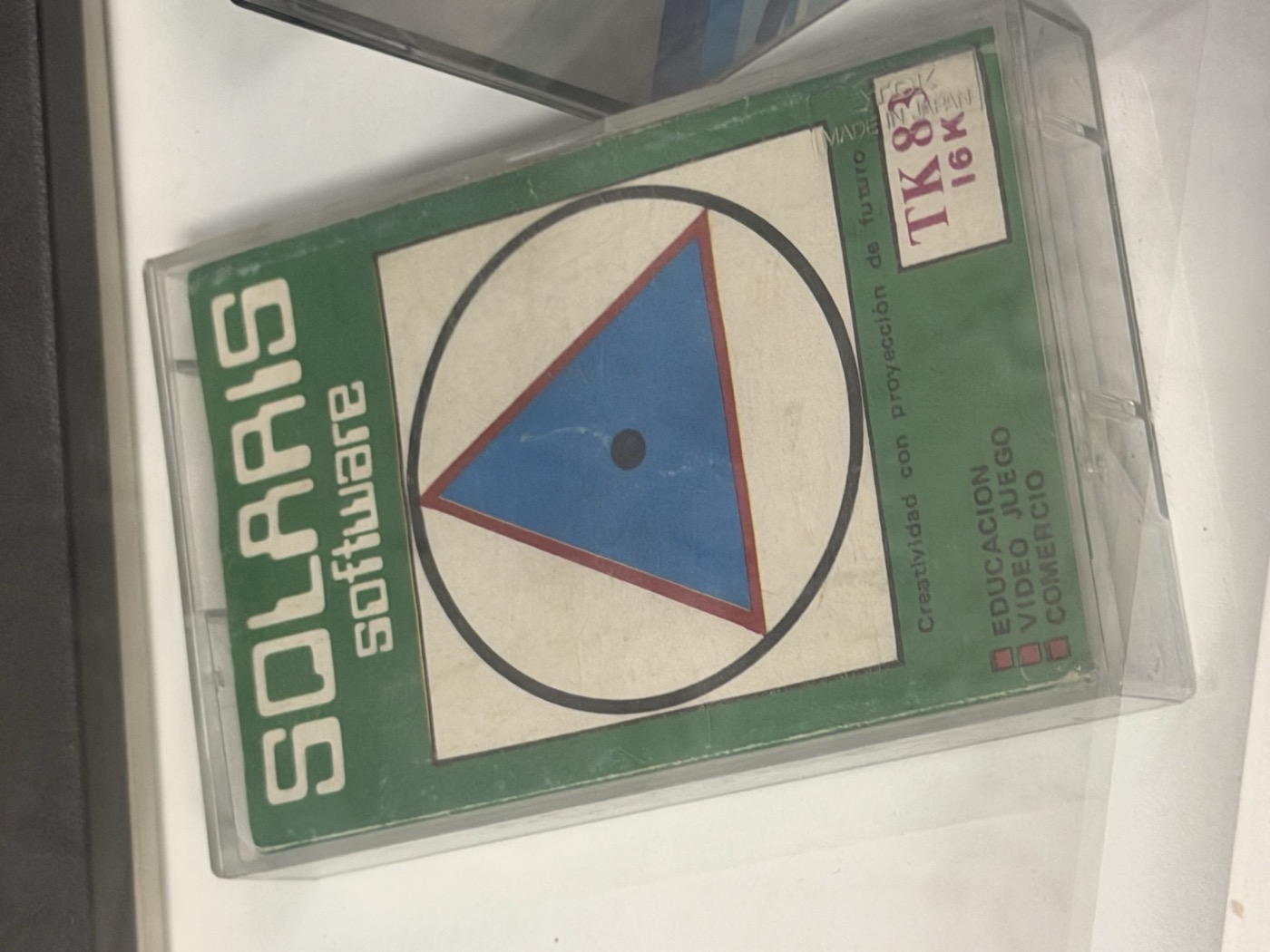
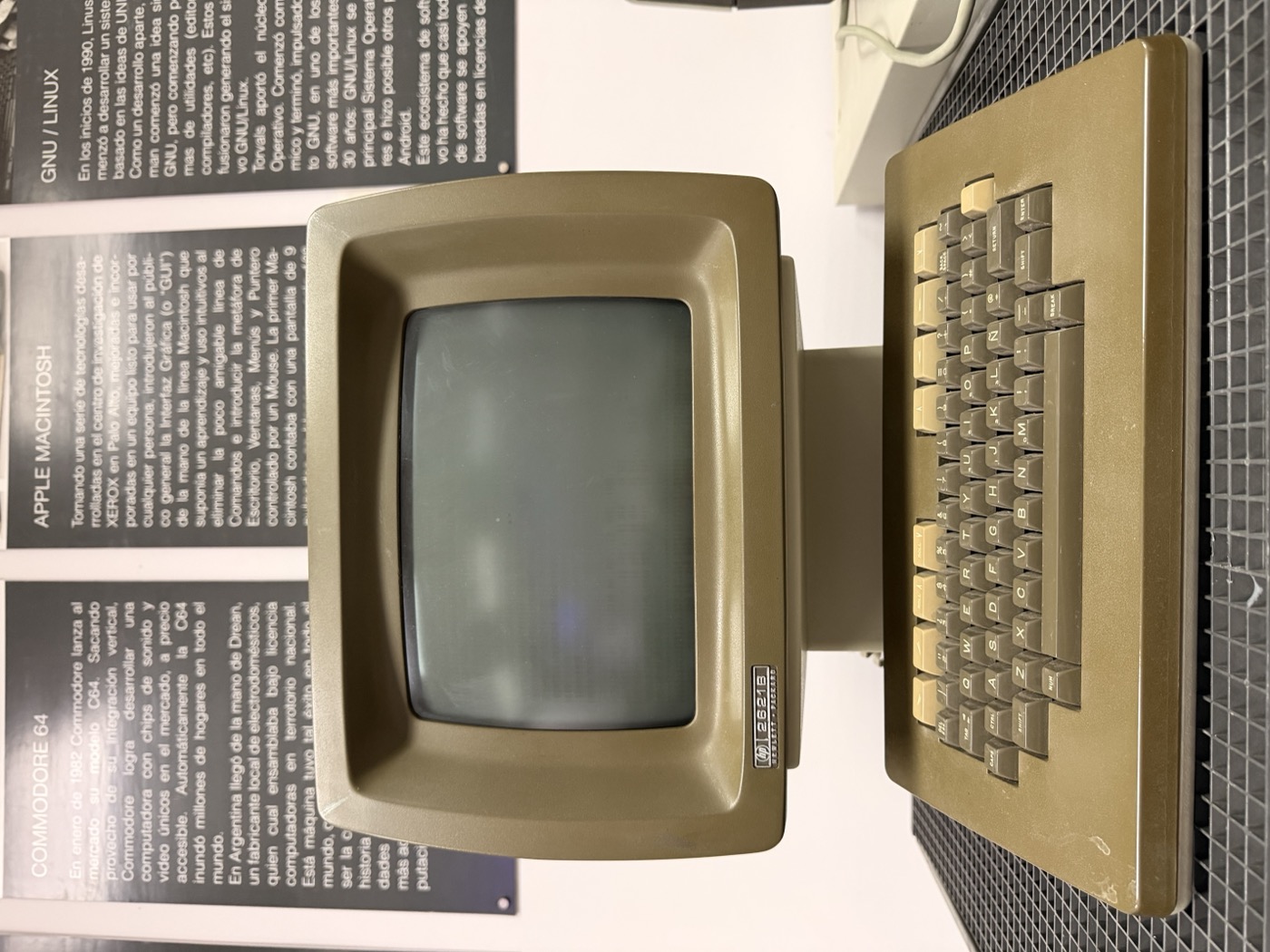
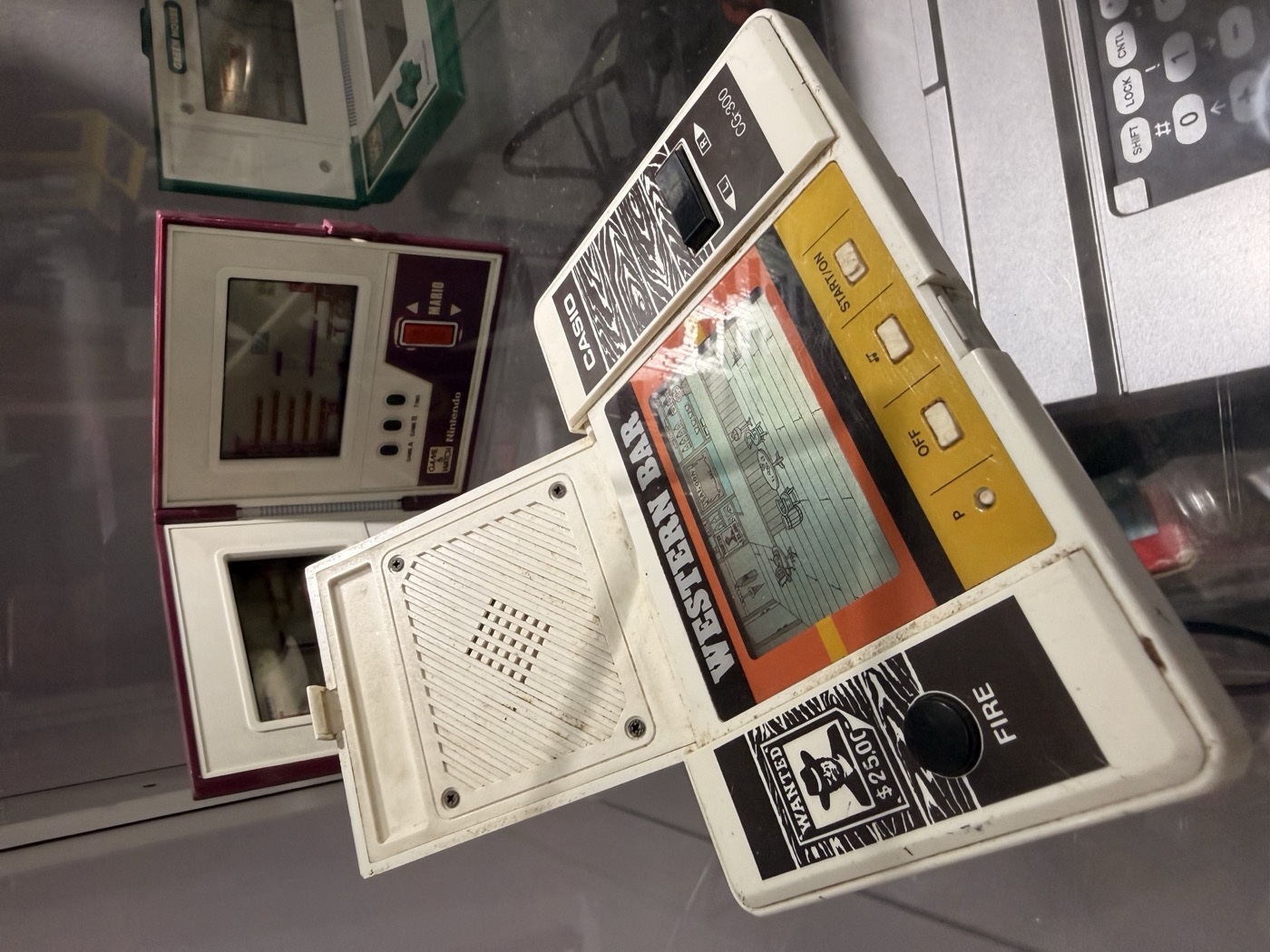
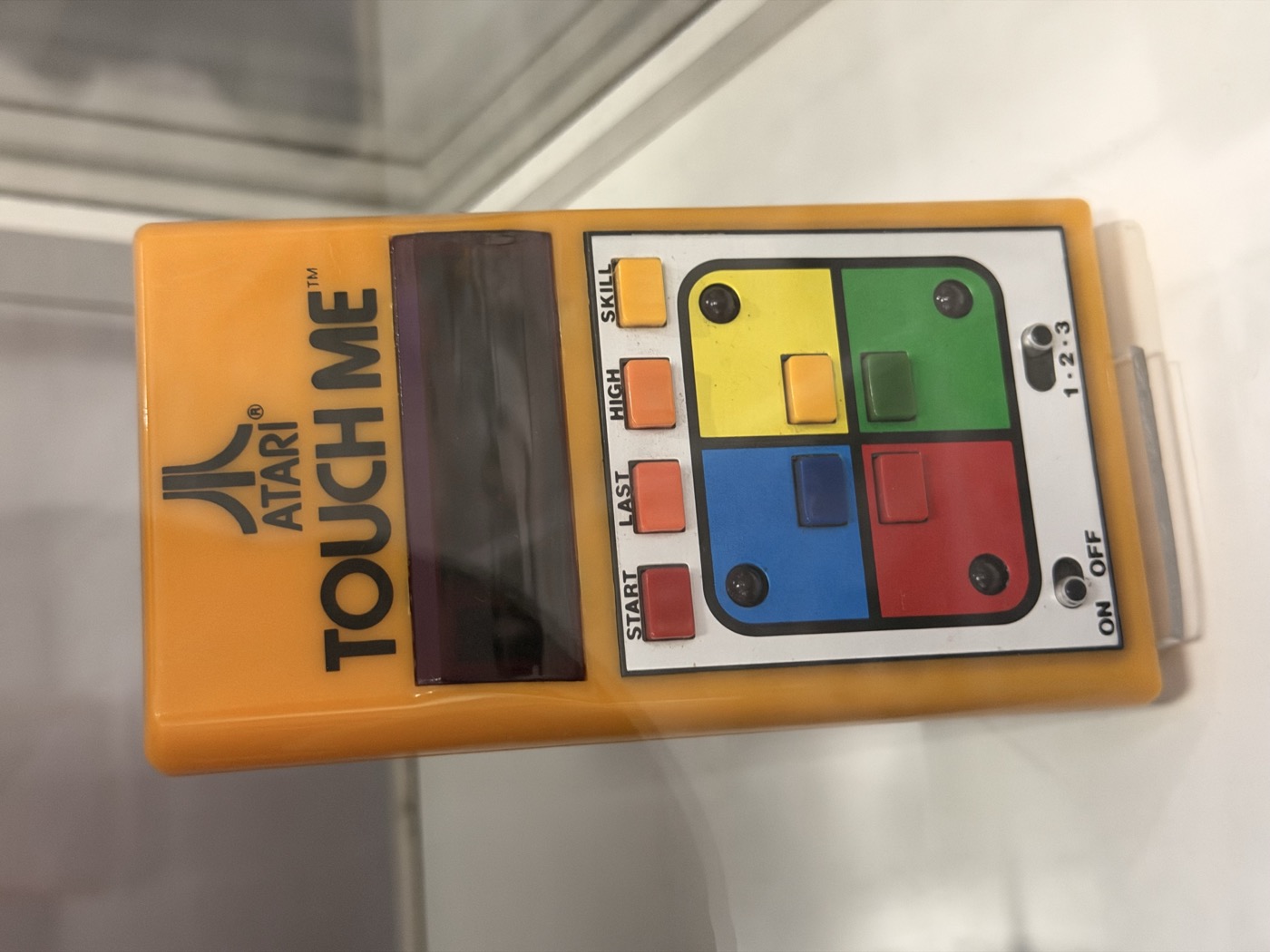
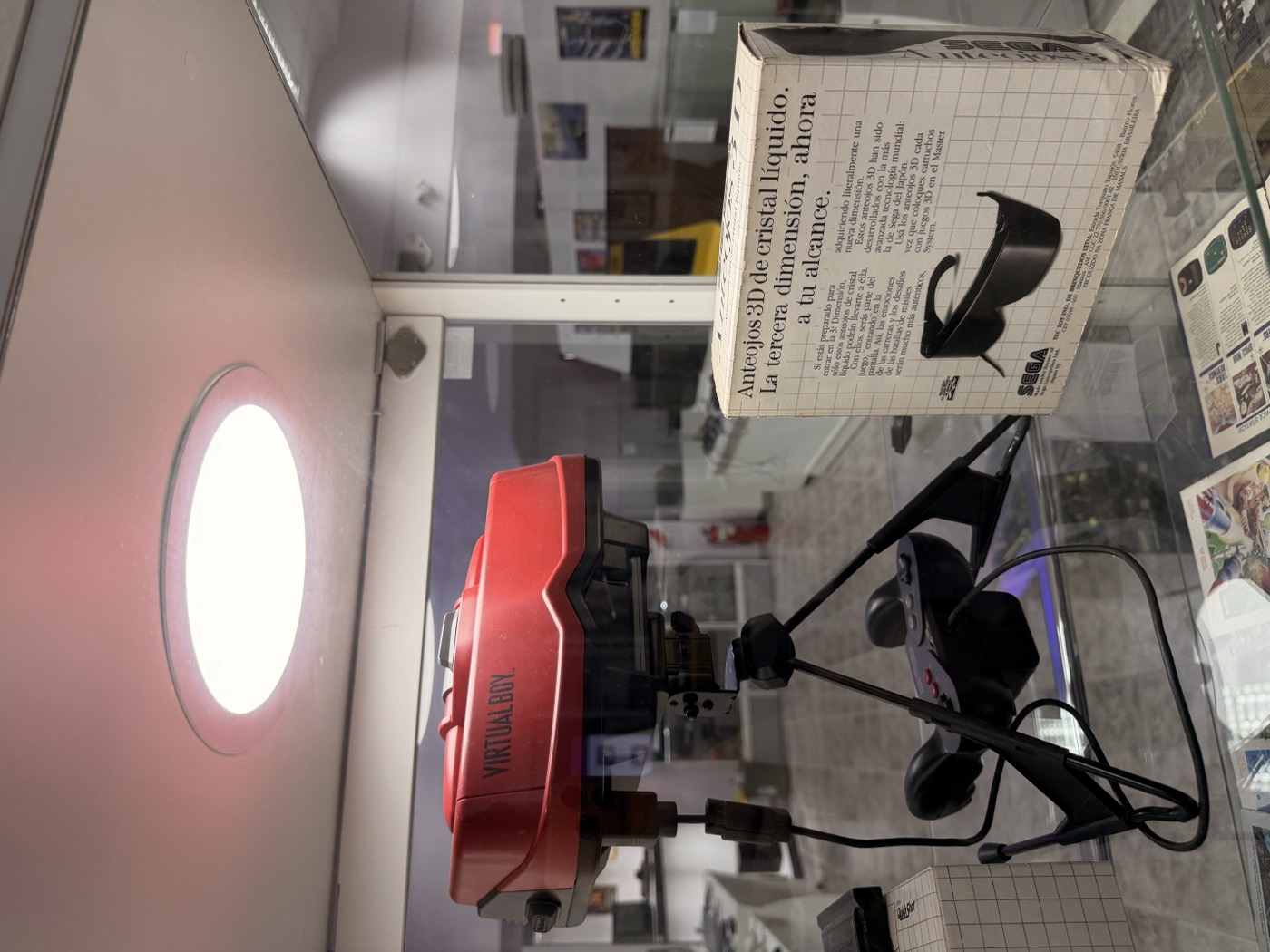
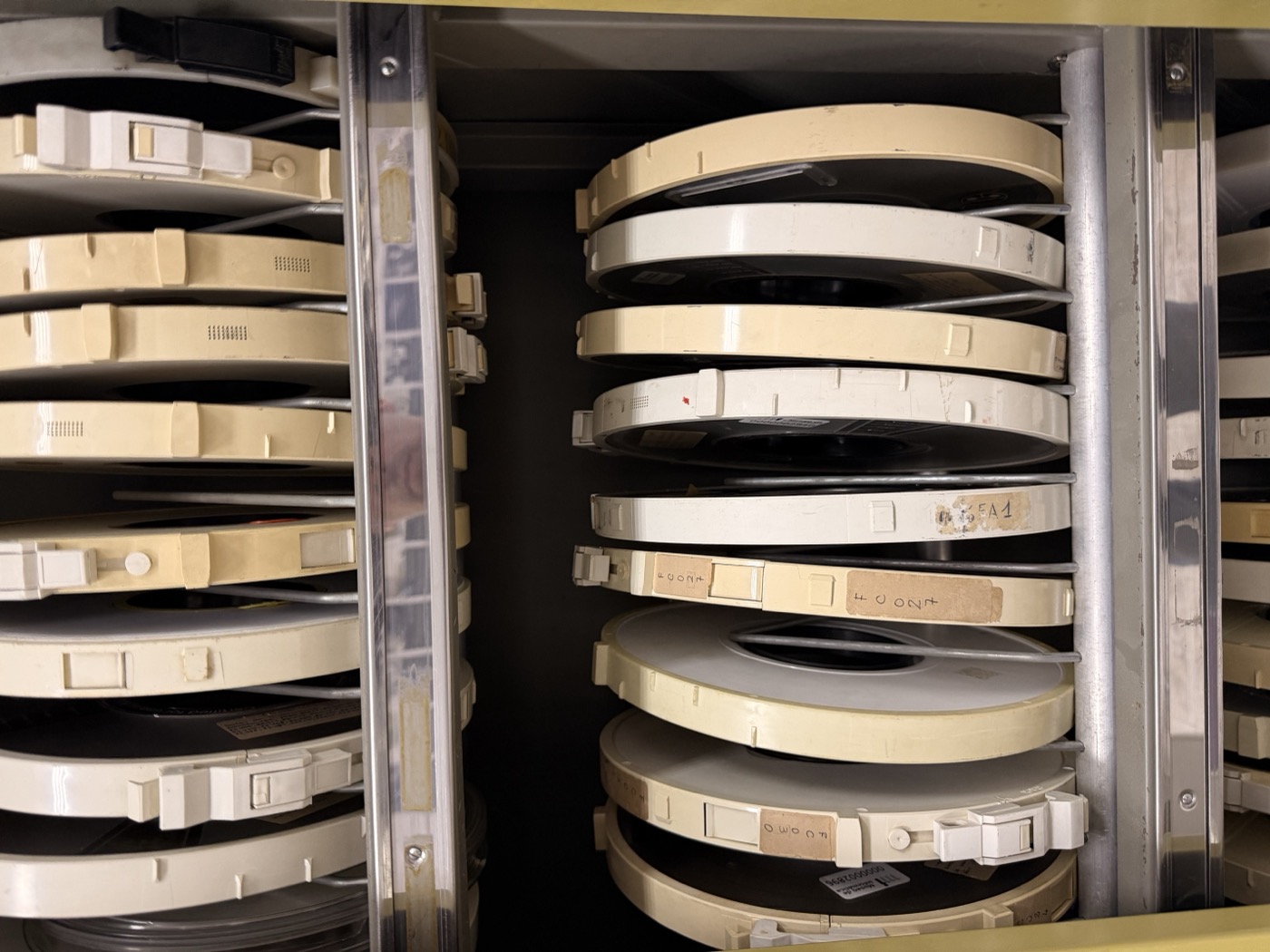
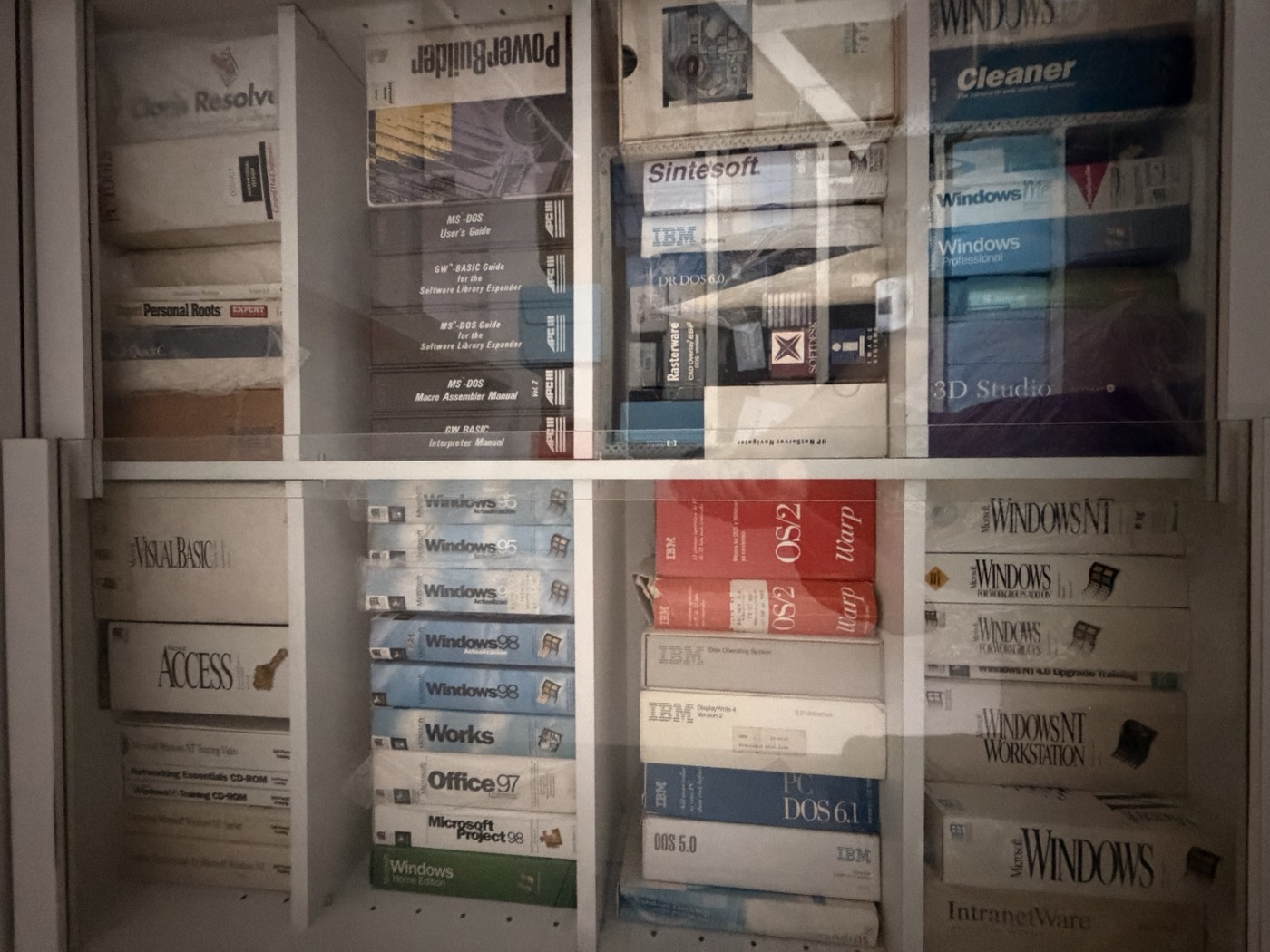
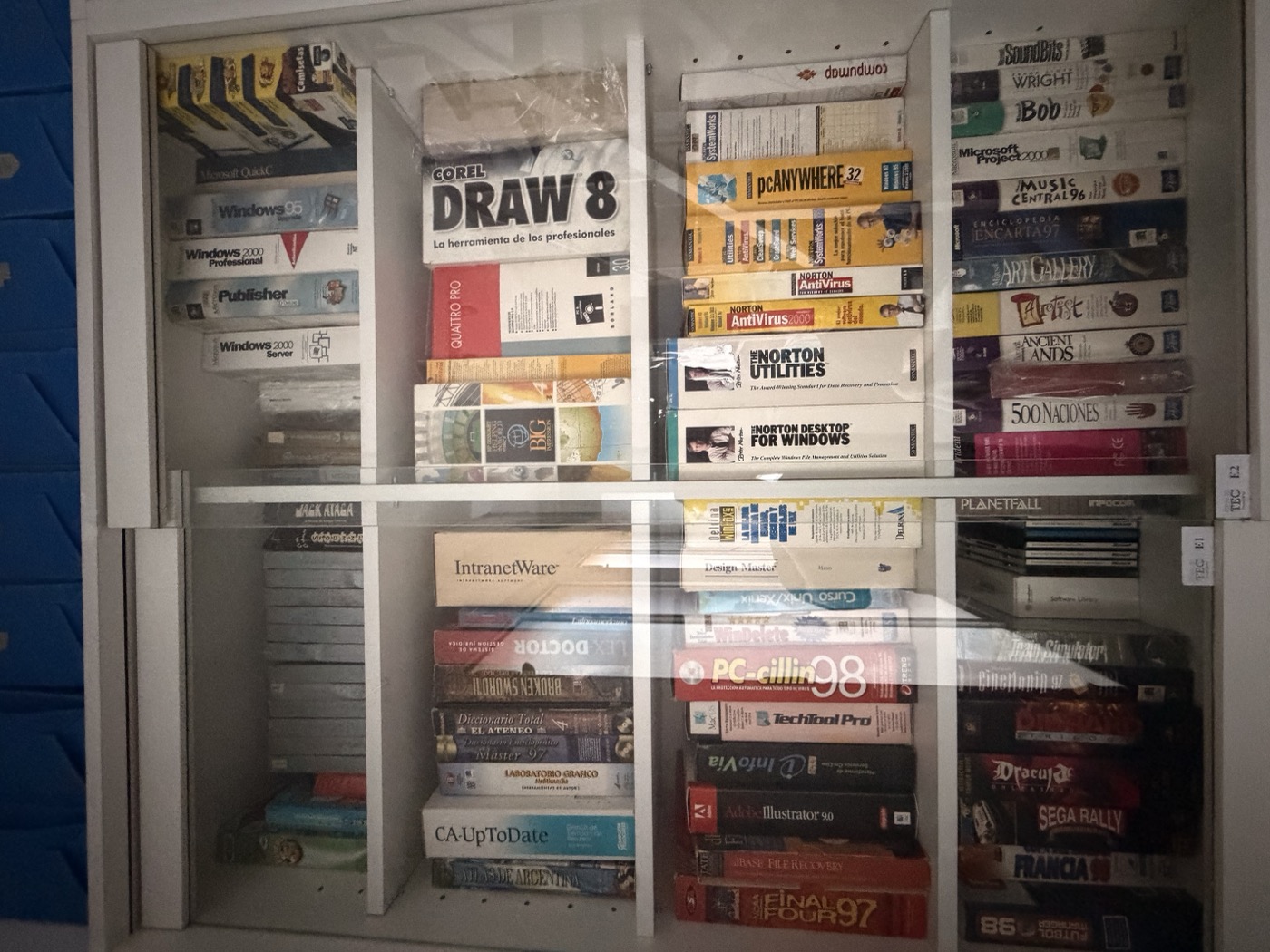
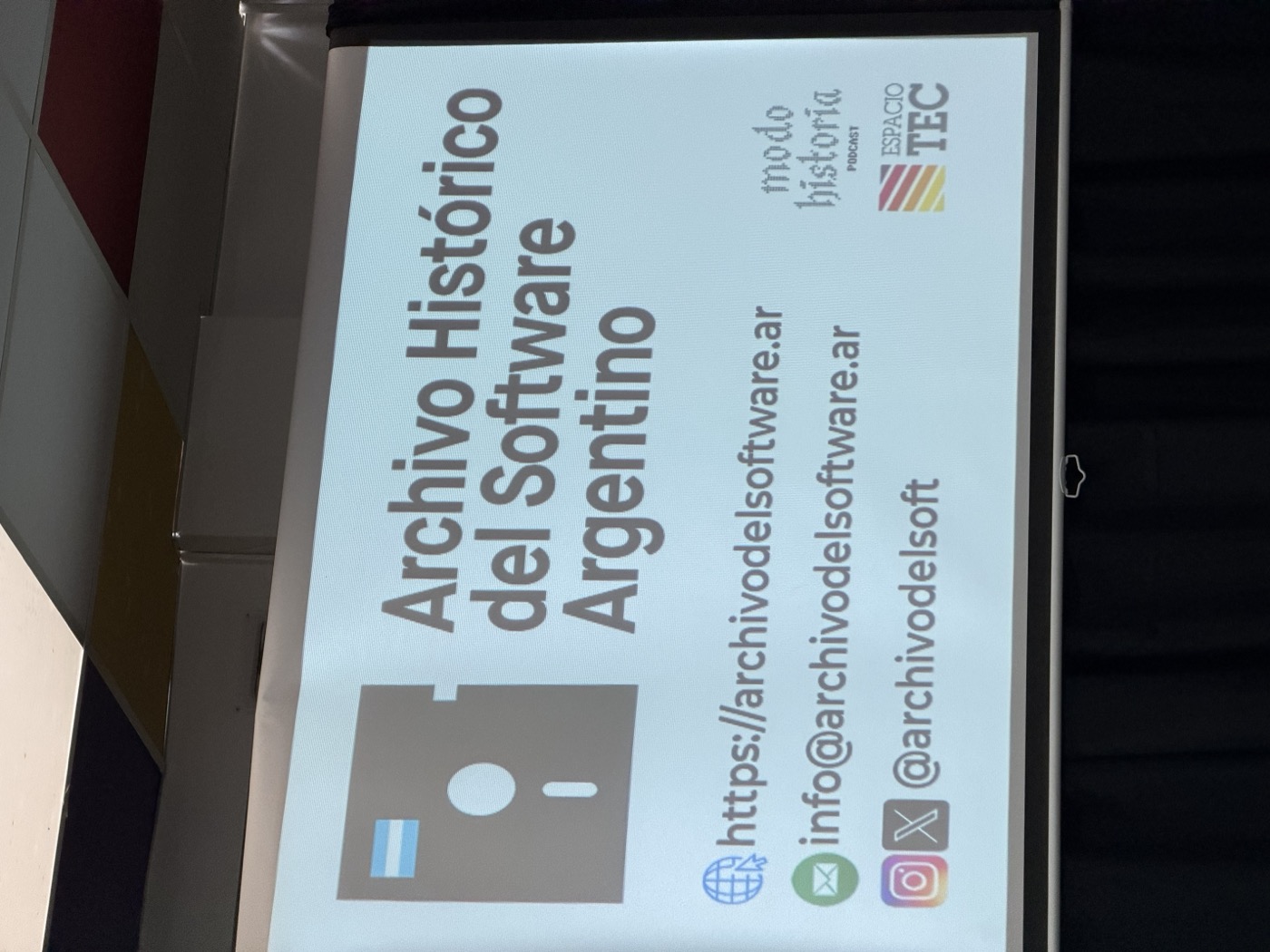
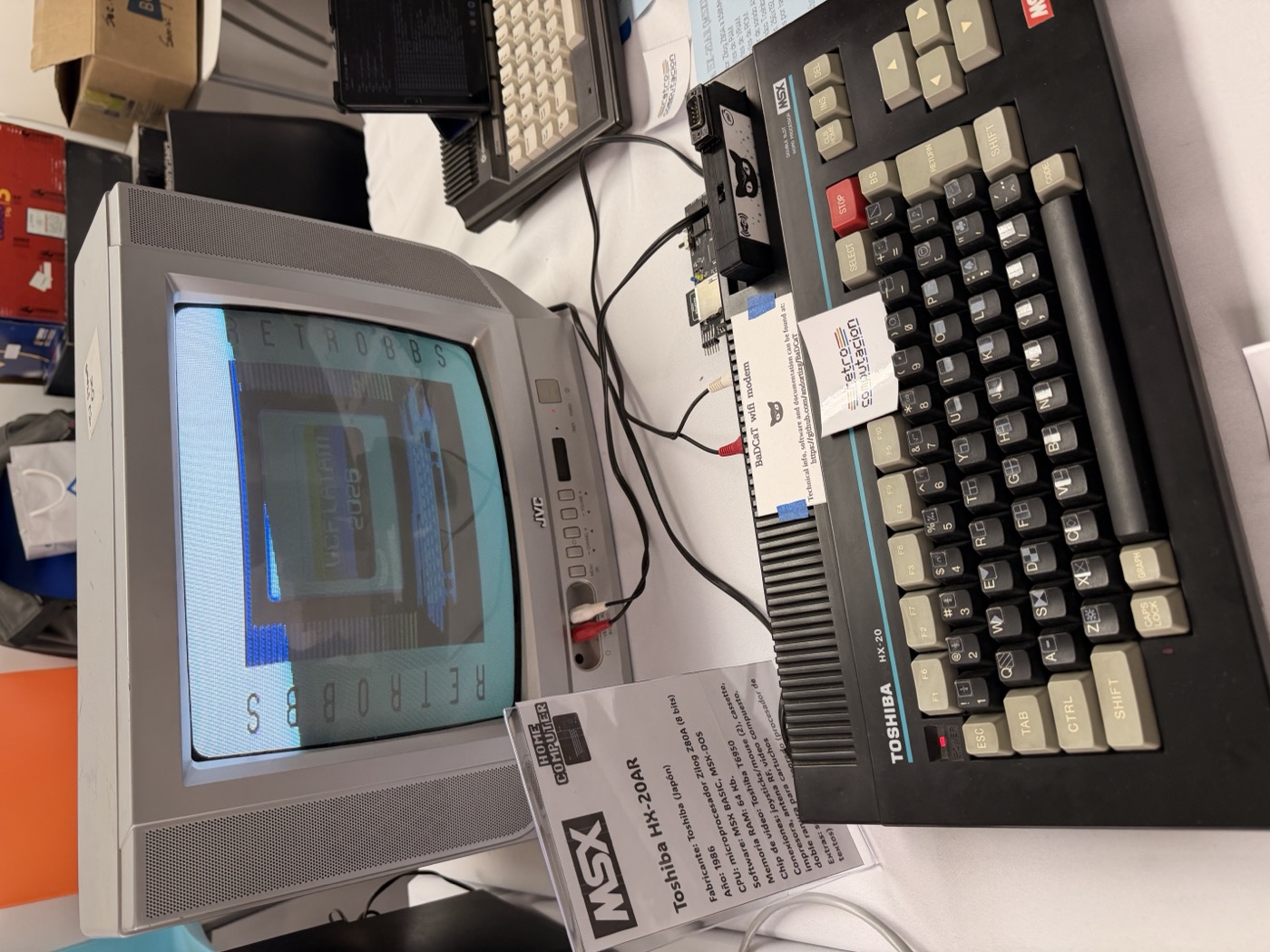
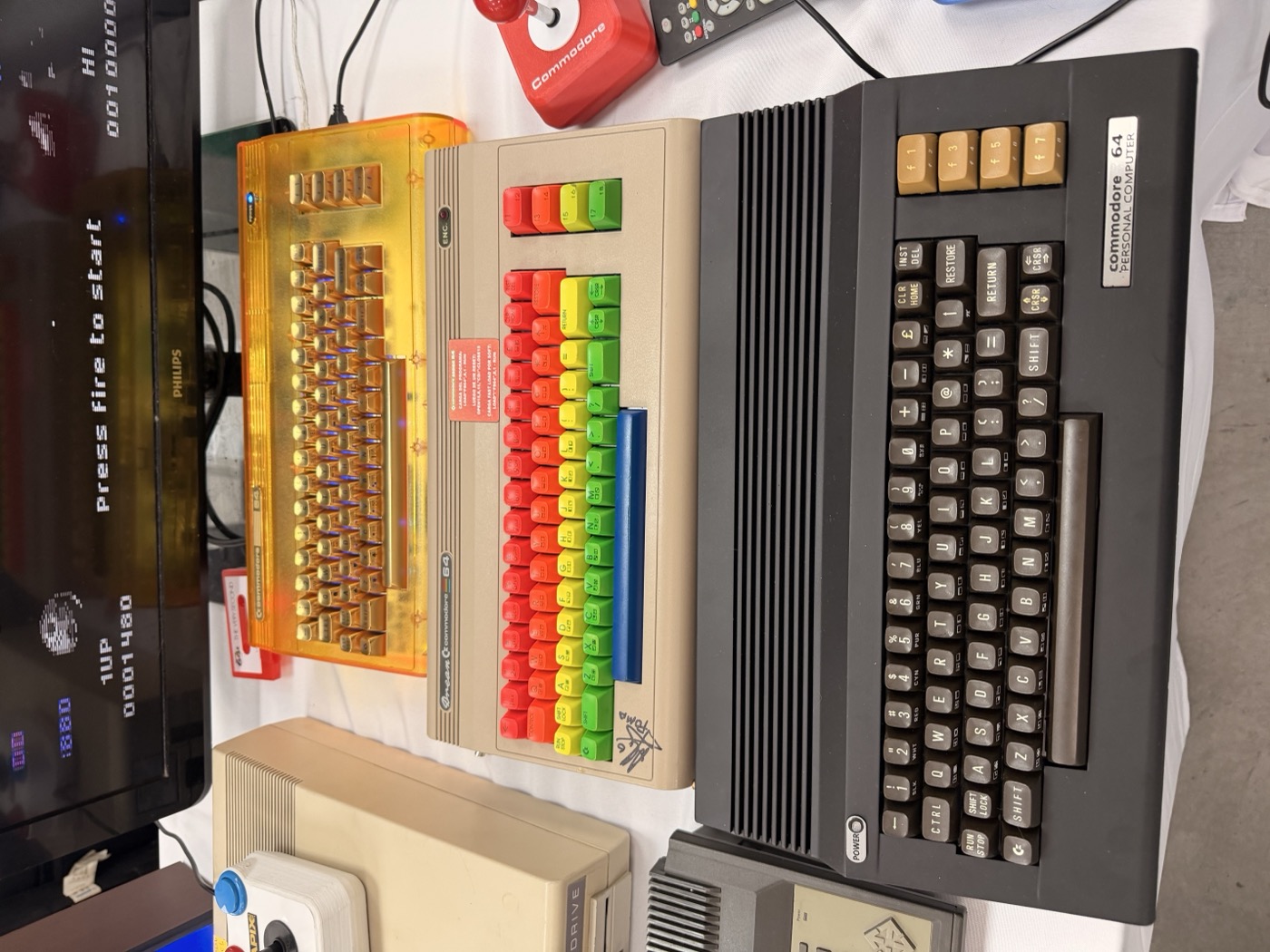
There was the expected and the unexpected. Expected: Commodores, Spectrums, Amstrads, Coleco Visions, an Atari 800XE. Less expected: a Toshiba HX-20AR, an HP 2621B, an Argentine Western Bar console (I had one as a kid), an Atari Touch Me, Sega 3D glasses, a historical archive of Argentine software with tapes and manuals.
The people
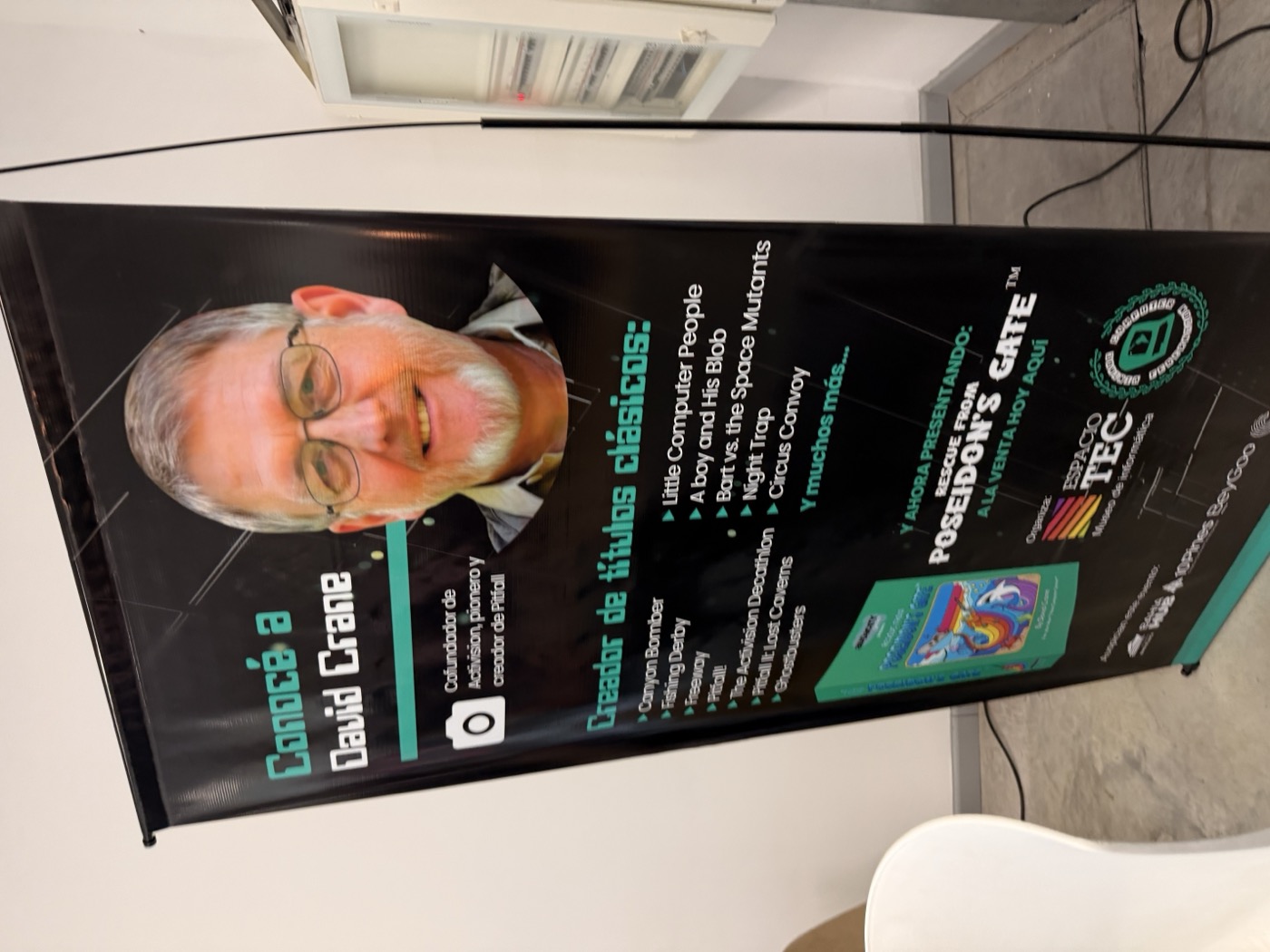
David Crane walked the festival like anyone else. The co-founder of Activision, the man who fit a jungle, a running character and a physics system into 4 KB of Atari 2600, wasn't sitting at a table waiting his turn for photos. He was walking the booths, talking to makers, asking what each machine did. The philosophy he used to build Pitfall! is still with him: constraints force creativity. Pitfall! exists because he had to think harder, not because he had more tools. He's still designing new games.
I bought one of his new games, Rescue from Poseidon's Gate for Atari 2600, and he signed it.
Carlinho Rienzi, from osolabs.tech, brought the C20 — a computer designed and built here, today, not in the eighties. He had it powered on at his table, menu running. His Nerdearla talk about the project deserves its own write-up: how you build a computer that's thinkable end to end, with current judgment, without breaking the logic of the machines that inspired it.
Roberto Trillo brought mechanical calculators from the 1800s. Machines that did arithmetic before the word "computer" existed. They were running, in the sense that you could operate them — crank, gears, paper. History with buttons that work.
Hernán Wilkinson gave a talk titled La Historia también te da Sorpresas (History Also Gives You Surprises). It did. Every working TI-99/4A, every breadboard blinking an LED, every Spectrum, every calculator was evidence that things don't simply disappear. They persist. Someone keeps them alive.
Hugo Mazer
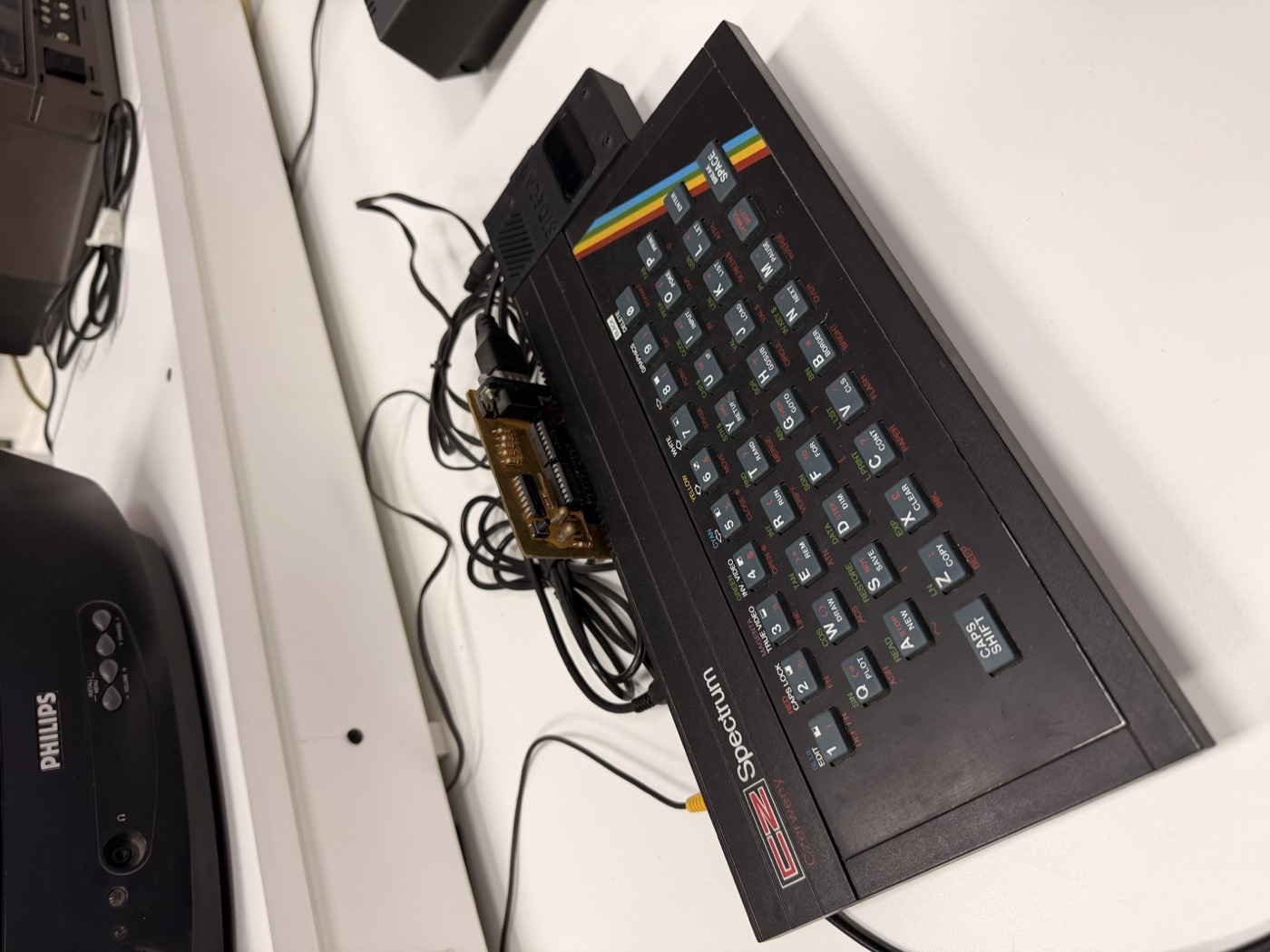
Hugo Mazer built Argentine computers. Not as a manager or curator, but as one of the people who designed and manufactured them. With Oscar Crippa, he restarted Czerweny's electronics division in Paraná. Out of that division came the CZ-1000, a computer with very high domestic component integration. And out of it came the CZ Spectrum — the Argentine clone of the ZX Spectrum, the machine that taught a generation of kids in this country to program. They were producing thousands of units. It was real. It worked.
At the Bahía HUB warehouse he walked among machines that had come out of factories like his, talking to the people still building things. A CZ Spectrum powered on at a festival table, and standing next to it, one of the people who built it.
Saturday: Espacio TEC
On Saturday part of the festival moved to Espacio TEC. The museum is the piece that makes everything else make sense — a room where the machines live, where you can sit down and use them, where the history isn't behind glass. When something breaks it gets fixed; when something doesn't work, somebody pulls up a datasheet and swaps the chip. And it shows: the people who run it know what they're doing and they do it for love.
Seba Gurvitsch (@soy_gavilan) premiered the first part of Fabricantes, ensambladores, clones, truchos y piratas (Manufacturers, Assemblers, Clones, Counterfeits and Pirates), his documentary on the underground history of Argentine computing — the clones, the bootlegs, the local assembly operations, the people who kept things alive when the official channels stopped mattering. The room was full. When it ended, people stood up to applaud. That history, if no one records it, gets lost. Seba is recording it.
Talking between screenings with collectors, makers, restorers and teachers — people who'll spend an hour explaining what they fixed and why it matters that things still run — something clicked. This wasn't a collectors' convention pricing their wares. It wasn't a museum piece either. It was a classroom without an assigned teacher, where someone brings a working TI-99/4A, someone else brings a FlashROM99, and three tables over there's somebody explaining why the MSX standard, decades later, still draws a community that builds new machines for it. We'd tried to put words to something similar with Edu at T3chFest, in a talk we called Amigos de Grandes: you don't build communities, you build containers and let people fill them. Espacio TEC is exactly that.
— Jassu · Bahía Blanca, April 2026
Llegué a Bahía Blanca un jueves. El primer VCF Latam — la edición latinoamericana del Vintage Computer Festival — abría al día siguiente, así que tuve la tarde para reconocer el terreno. Lo primero fue ir a Espacio TEC, en Thompson 665. Adentro había computadoras de varias épocas, varias funcionando: Apple Lisa, IBM, Commodores.
Ahí también estaba Clementina, la primera computadora científica de la Argentina, instalada en 1961 en la Universidad de Buenos Aires bajo la gestión de Manuel Sadosky. Verla en el primer VCF Latam era una declaración de principios.
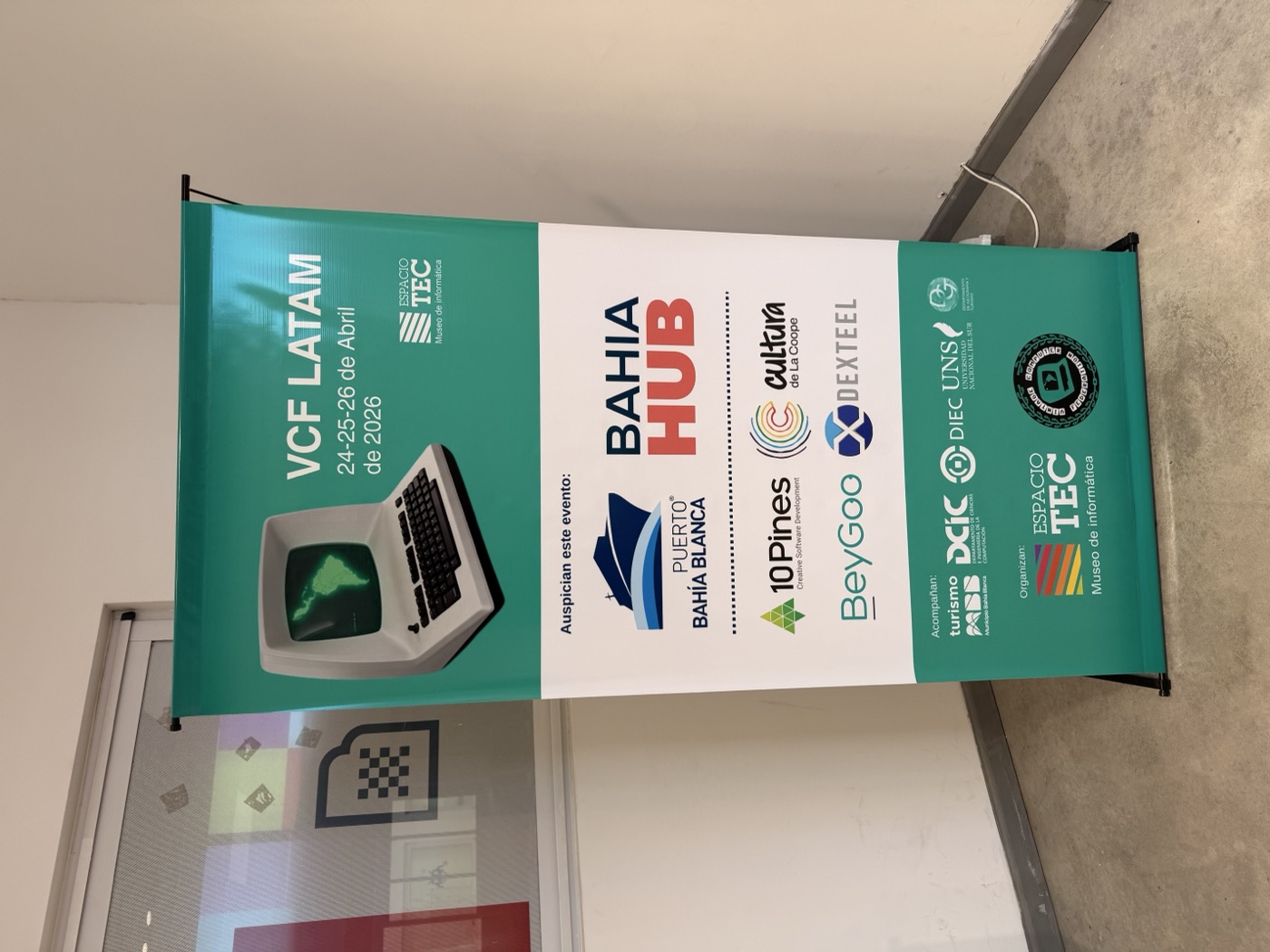
El evento ocupaba dos sedes a pocas cuadras: el galpón de Bahía HUB y el museo en Thompson.
Bahia HUB
Lo primero que llamaba la atención era la cantidad de piezas que había: monitores CRT, teclados, datasettes, beeps de arranque, todo prendido al mismo tiempo.
Había una TI-99/4A funcionando con un cartucho FlashROM99 — la máquina rara de Texas Instruments de 1979, con CPU de 16 bits cuando todos los demás iban en 8, de vuelta a la vida sin tocar el hardware original. Atrás, un MSXvR — un MSX moderno, mantenido vivo por una comunidad que se niega a dejar morir el estándar. Más allá, un 6502 modular con cada subsistema en su propio bloque de acrílico azul: alimentación, ROM, RAM, bus, ACIA, CPU.
Estaba lo que esperaba encontrar y las sorpresas. Esperables: Commodores, Spectrums, Amstrads, Coleco Visions, una Atari 800XE. Sorpresas: una Toshiba HX-20AR, una HP 2621B, una consola Western Bar argentina (esa la tuve de chico), una Atari Touch Me, los anteojos 3D de Sega, un archivo histórico del software argentino con cintas y manuales.
David Crane
David Crane caminaba el festival como uno más. El co-fundador de Activision, el tipo que metió una selva, un personaje corriendo y un sistema de física en 4 KB en la Atari 2600, no estaba sentado en una mesa esperando turno para fotos. Estaba mirando los stands, conversando con los makers, preguntando qué hacía cada máquina. La filosofía con la que armó Pitfall! la sigue cargando: las restricciones fuerzan la creatividad. Pitfall! existe porque Crane tuvo que pensar más, no porque tuviera más herramientas. Y sigue diseñando juegos nuevos.
Compré uno de sus nuevos juegos, Rescue from Poseidon's Gate y lo firmó.
Carlinho Rienzi, de osolabs.tech, trajo la C20 — una computadora diseñada y construida acá, hoy, no en los años 80. La tenía prendida en su mesa, con el menú andando. Su charla en Nerdearla sobre el proyecto vale una nota aparte: cómo armar una computadora pensable de punta a punta, con criterio actual, sin dejar de respetar la lógica de las máquinas que la inspiran.
Roberto Trillo trajo calculadoras mecánicas de 1800. Máquinas que hacían cuentas antes de que existiera la palabra "computadora". Estaban prendidas, en el sentido de que se podían operar — manivela, ruedas dentadas, papel. Historia con botones que andan.
Hernán Wilkinson dio una charla titulada La historia también te da sorpresas. Las dio. Cada TI-99/4A funcionando, cada protoboard parpadeando un LED, cada Spectrum, cada calculadora era evidencia de que las cosas no desaparecen sin más. Persisten. Alguien las mantiene vivas.
Hugo Mazer
Hugo Mazer construyó computadoras argentinas. No como gerente ni curador, sino como uno de los que las diseñaron y fabricaron. Junto con Oscar Crippa reactivó la división electrónica de Czerweny en Paraná. De ahí salió la CZ-1000, una computadora con altísima integración de componentes nacionales. Y de ahí salió también la CZ Spectrum, el clon argentino del ZX Spectrum, la máquina que enseñó a programar a una generación de chicos en este país. Producían miles de unidades. Era real. Funcionaba.
En el galpón de Bahia HUB caminaba entre máquinas que habían salido de fábricas como la suya, hablando con gente que sigue construyendo cosas. Una CZ Spectrum prendida en una mesa de festival y, al lado, uno de los que la fabricaron.
Espacio TEC
El sábado, parte del festival se desplazó a Espacio TEC. El museo es la pieza que hace que todo lo demás tenga sentido — una sala donde las máquinas viven, donde te podés sentar a usarlas, donde la historia no está detrás de un vidrio. Cuando algo se rompe, se arregla; cuando algo no anda, alguien busca el datasheet y le cambia el chip. Y se nota: la gente que lo arma sabe lo que hace y lo hace por amor.
Ahí Seba Gurvitsch (@soy_gavilan) estrenó la primera parte de Fabricantes, ensambladores, clones, truchos y piratas, su documental sobre la historia oculta de la computación argentina: los clones, los truchos, las operaciones de ensamblaje local, la gente que mantuvo las cosas vivas cuando los canales oficiales ya no daban. La sala estaba llena. Cuando terminó, la gente se paró a aplaudir. Esa historia, si nadie la registra, se pierde. Seba la está registrando.
Charlando entre proyección y proyección con coleccionistas, makers, restauradores y profesores — gente que pasa una hora explicándote qué arregló y por qué importa que las cosas sigan funcionando — me cayó la ficha. Esto no era una convención de coleccionistas valuando sus cosas. Tampoco era una pieza de museo. Era un aula sin profesor designado, donde alguien trae una TI-99/4A funcionando, otro un FlashROM99, y tres mesas más allá hay alguien explicando por qué el estándar MSX, décadas después, todavía mueve a una comunidad que sigue construyendo máquinas para él. Algo parecido habíamos intentado decir con Edu en T3chFest, en una charla que llamamos Amigos de Grandes: las comunidades no se construyen, se arman contenedores y después la gente las habita. Espacio TEC es exactamente eso.