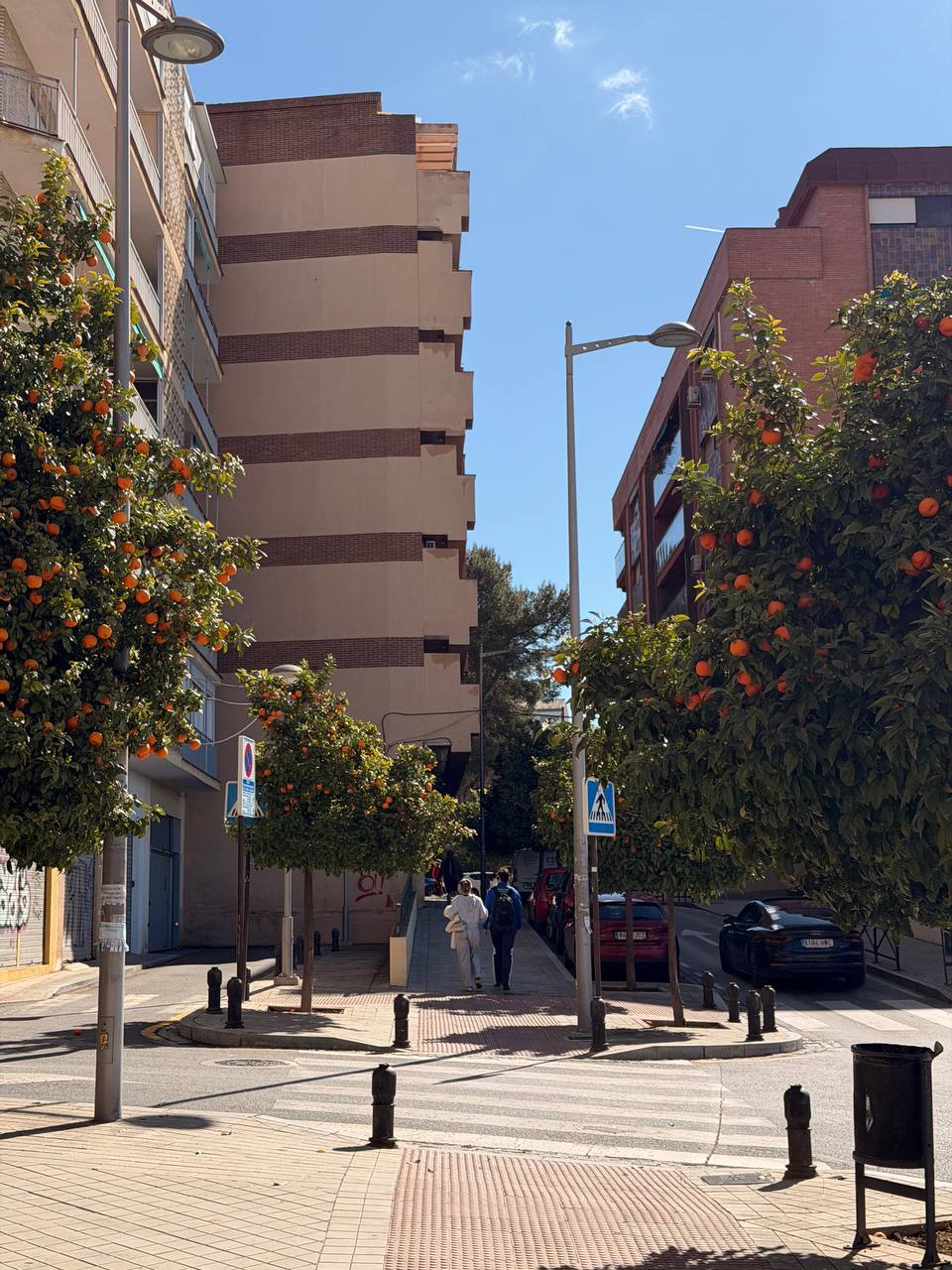
There are orange trees on the streets of Granada that bear fruit nobody eats.
They're bitter. They've been there for centuries, lined up on the sidewalks like forgotten soldiers, filling the air with orange blossom in spring and the ground with rotting fruit in winter. Tourists look at them and think they're decorative. Locals don't even see them anymore.
But there was a time when those trees bore sweet fruit.
The Arabs arrived on the peninsula in 711. They stayed for almost eight hundred years. It wasn't an occupation: it was a civilization. They built the Alhambra, invented algebra, designed irrigation systems that still work today, and planted orange trees on every street, every patio, every garden.
Sweet orange trees were a luxury. They required technique: precise grafting, constant care, knowledge passed down through generations. The Moors knew exactly when to prune, how to graft a bitter rootstock with a sweet variety, how much water to give. The result was fruit you could eat straight from the tree, juicy and perfect, in the middle of the city.
The Nasrids, the last Moorish dynasty to rule Granada, took that knowledge to its highest expression. For two hundred and fifty years, from the 13th century to the end, they turned a small kingdom surrounded by enemies into the most refined place in Europe. It wasn't just the Alhambra with its water courtyards and infinite arabesques. It was everything else: the public baths, the libraries, the hospitals, the translation schools where Aristotle was read in Arabic while the rest of Europe burned people for reading. Muhammad V had inscribed on the walls of the Alhambra: "There is no victor but God." But he also had poems inscribed. Poems on the walls. A palace you could read.
They also built the acequias. Irrigation channels that carried water down from the Sierra Nevada by gravity, without pumps, without engines, distributed with mathematical precision that still amazes modern engineers. The acequias of the Darro and Genil fed the Generalife gardens, the orchards of the vega, the courtyards of every house. Today, more than five hundred years later, some of those acequias still work. Still carry water. The farmers of Granada's vega still irrigate with the system the Moors designed. Nobody improved it. Nobody had to.
In 1491, Boabdil negotiated the surrender. Ferdinand and Isabella signed a treaty: the Capitulations of Granada. Muslims were guaranteed the right to their religion, their language, their customs, their laws. They could stay. They could keep being who they were. The ink had barely dried when the Catholic Monarchs began breaking every promise.
In 1492, the Catholic Monarchs took Granada. It was the last Moorish kingdom to fall. Boabdil, the last sultan, wept as he left. His mother told him: "Weep like a woman for what you could not defend as a man." They left for North Africa. Some kept the key to their house.
Five hundred years later, there are families in Morocco who still have that key.
The Christians kept everything. The palaces, the mosques (they turned them into churches), the houses, the gardens, the orange trees. But they didn't keep the knowledge.
First came Cardinal Cisneros, in 1499. He ordered the books burned. Thousands of Arabic manuscripts went up in flames in the Plaza de Bib-Rambla: treatises on medicine, astronomy, philosophy, poetry, mathematics. Entire centuries of thought turned to ash in an afternoon. A few medical books were saved, because even Cisneros understood that someone had to heal the sick. Everything else: into the fire. Then came the forced conversions, the Inquisition, and finally the total expulsion of the Moriscos in 1609. It wasn't enough to have the land. They had to erase the memory.
Nobody knew how to graft. Nobody knew how to keep the trees sweet. Over time, without care, the orange trees reverted to their natural state: bitter. The fruit became inedible. The trees kept blooming (orange blossom doesn't distinguish between owners) but the fruit was useless.
There's a legend that says something else. That the Moors, knowing they would be expelled, deliberately grafted the sweet orange trees onto bitter rootstock. A final act of silent resistance. If we can't enjoy them, neither will you.
It doesn't matter which version is true. The result is the same.
I walked through Granada today, through the streets of the Albaicín, between white houses and medieval cisterns. I drank Moorish tea in a tea house on Calle Calderetería. I saw the Alhambra from the Mirador de San Nicolás. I sat on the Paseo de los Tristes while a guitarist played flamenco under the orange trees.
And I thought about what happens when you expel the people who know how to do things.
Spanish is full of Arab ghosts. "Ojalá" comes from "inshallah", God willing. "Almohada" (pillow) from "al-mukhadda." "Acequia" from "as-saqiya." Sugar, algebra, algorithm, mayor, village, carpet. More than four thousand words. Every time someone from Granada says "ojalá" they're invoking, without knowing it, the God of those who were expelled. Language remembers what history tries to forget.
You keep the buildings, the streets, the trees. But the fruit turns bitter. It always turns bitter.
The orange trees of Granada are still there. They still bloom every spring. They still bear fruit nobody eats. And they still remember, silently, that there was a time when they were sweet.
Granada, March 2026
Hay naranjos en las calles de Granada que dan fruta que nadie come.
Son amargos. Están ahí desde hace siglos, alineados en las veredas como soldados olvidados, llenando el aire de azahar en primavera y el piso de fruta podrida en invierno. Los turistas los miran y piensan que son decoración. Los locales ya ni los ven.
Pero hubo un tiempo en que esos naranjos daban fruta dulce.
Los árabes llegaron a la península en el 711. Se quedaron casi ochocientos años. No fue una ocupación: fue una civilización. Construyeron la Alhambra, inventaron el álgebra, diseñaron sistemas de riego que todavía funcionan, y plantaron naranjos en cada calle, cada patio, cada jardín.
Los naranjos dulces eran un lujo. Requerían técnica: injertos precisos, cuidado constante, conocimiento que se pasaba de generación en generación. Los moros sabían exactamente cuándo podar, cómo injertar un patrón amargo con una variedad dulce, cuánta agua dar. El resultado era fruta que se comía directo del árbol, jugosa y perfecta, en medio de la ciudad.
Los nazaríes, la última dinastía mora en gobernar Granada, llevaron ese conocimiento a su máxima expresión. Durante doscientos cincuenta años, desde el siglo XIII hasta el final, convirtieron un reino pequeño y rodeado de enemigos en el lugar más refinado de Europa. No era solo la Alhambra con sus patios de agua y sus arabescos infinitos. Era todo lo demás: los baños públicos, las bibliotecas, los hospitales, las escuelas de traducción donde se leía a Aristóteles en árabe cuando en el resto de Europa se quemaba a la gente por leer. Muhammad V hizo grabar en los muros de la Alhambra: "No hay vencedor sino Dios." Pero también hizo grabar poemas. Poemas en las paredes. Un palacio que se podía leer.
También construyeron las acequias. Canales de riego que bajaban el agua de Sierra Nevada por gravedad, sin bombas, sin motores, distribuidos con una precisión matemática que todavía asombra a los ingenieros modernos. Las acequias del Darro y del Genil alimentaban los jardines del Generalife, las huertas de la vega, los patios de cada casa. Hoy, más de quinientos años después, algunas de esas acequias siguen funcionando. Siguen llevando agua. Los agricultores de la vega de Granada todavía riegan con el sistema que diseñaron los moros. Nadie lo mejoró. Nadie tuvo que hacerlo.
En 1491, Boabdil negoció la rendición. Fernando e Isabel firmaron un tratado: las Capitulaciones de Granada. Se garantizaba a los musulmanes el derecho a su religión, su lengua, sus costumbres, sus leyes. Podían quedarse. Podían seguir siendo quienes eran. La tinta apenas se había secado cuando los Reyes Católicos empezaron a romper cada promesa.
En 1492, los Reyes Católicos tomaron Granada. Fue el último reino moro en caer. Boabdil, el último sultán, lloró al irse. Su madre le dijo: "Llora como mujer lo que no supiste defender como hombre." Se fueron al norte de África. Algunos guardaron la llave de su casa.
Quinientos años después, hay familias en Marruecos que todavía tienen esa llave.
Los cristianos se quedaron con todo. Los palacios, las mezquitas (las convirtieron en iglesias), las casas, los jardines, los naranjos. Pero no se quedaron con el conocimiento.
Primero fue el Cardenal Cisneros, en 1499. Ordenó quemar los libros. Miles de manuscritos árabes ardieron en la plaza de Bib-Rambla: tratados de medicina, astronomía, filosofía, poesía, matemáticas. Siglos enteros de pensamiento convertidos en ceniza en una tarde. Se salvaron unos pocos libros de medicina, porque hasta Cisneros entendía que alguien tenía que curar a los enfermos. Todo lo demás: al fuego. Después vinieron las conversiones forzadas, la Inquisición, y finalmente la expulsión total de los moriscos en 1609. No bastaba con tener la tierra. Había que borrar la memoria.
Nadie sabía injertar. Nadie sabía mantener los árboles dulces. Con el tiempo, sin cuidado, los naranjos volvieron a su estado natural: amargos. La fruta se hizo incomible. Los árboles siguieron dando flores (el azahar no distingue de dueños) pero el fruto ya no servía.
Hay una leyenda que dice otra cosa. Que los moros, sabiendo que los iban a expulsar, injertaron a propósito los naranjos dulces con patrón amargo. Un último acto de resistencia silenciosa. Si no podemos disfrutarlos, ustedes tampoco.
No importa cuál versión sea cierta. El resultado es el mismo.
Caminé hoy por Granada, por las calles del Albaicín, entre casas blancas y aljibes medievales. Tomé té moruno en una tetería de la Calle Calderetería. Vi la Alhambra desde el Mirador de San Nicolás. Me senté en el Paseo de los Tristes mientras un guitarrista tocaba flamenco bajo los naranjos.
Y pensé en lo que pasa cuando echás a la gente que sabe hacer las cosas.
El español está lleno de fantasmas árabes. Ojalá viene de "inshallah", si Dios quiere. Almohada, de "al-mukhadda". Acequia, de "as-saqiya". Azúcar, álgebra, algoritmo, alcalde, aldea, alfombra. Más de cuatro mil palabras. Cada vez que un granadino dice "ojalá" está invocando, sin saberlo, al Dios de los que expulsaron. La lengua recuerda lo que la historia intenta olvidar.
Te quedás con los edificios, con las calles, con los árboles. Pero la fruta se vuelve amarga. Siempre se vuelve amarga.
Los naranjos de Granada siguen ahí. Siguen floreciendo cada primavera. Siguen dando fruta que nadie come. Y siguen recordando, callados, que hubo un tiempo en que eran dulces.
Granada, marzo 2026